
Navigating a large office building, a multi-tenant property, or a sprawling healthcare campus can be a
frustrating experience for first-time visitors. A confusing layout can lead to missed appointments, late
arrivals, and a negative first impression of your business or property. This is where a well-designed
system of directory and directional signs becomes an essential asset, transforming a potentially
stressful journey into a seamless and positive experience.
Directory and directional signs are the unsung heroes of a great visitor experience. They provide clarity,
reduce anxiety, and guide people to their destinations with confidence. For property managers and
business owners in Denver, investing in a high-quality wayfinding system is a strategic move that
enhances property value, improves tenant satisfaction, and reinforces a professional brand image.
The Role of Directory Signs in Multi-Tenant Buildings
In any multi-tenant building, the directory sign is the first point of contact for visitors. Typically located in
the main lobby, the directory serves as a master guide, listing all tenants and their corresponding floor
or suite numbers. A clear, easy-to-read directory is crucial for helping visitors orient themselves and
begin their journey through the building.
Modern directory signs have evolved far beyond simple lists of names. Digital directories offer a
dynamic and easily updatable solution, allowing property managers to make changes instantly. These
can be interactive, featuring touch screens and searchable databases. For a more classic and
sophisticated look, modular directory systems with interchangeable nameplates offer a professional
and easily maintainable option.
The Power of Effective Directional Signage
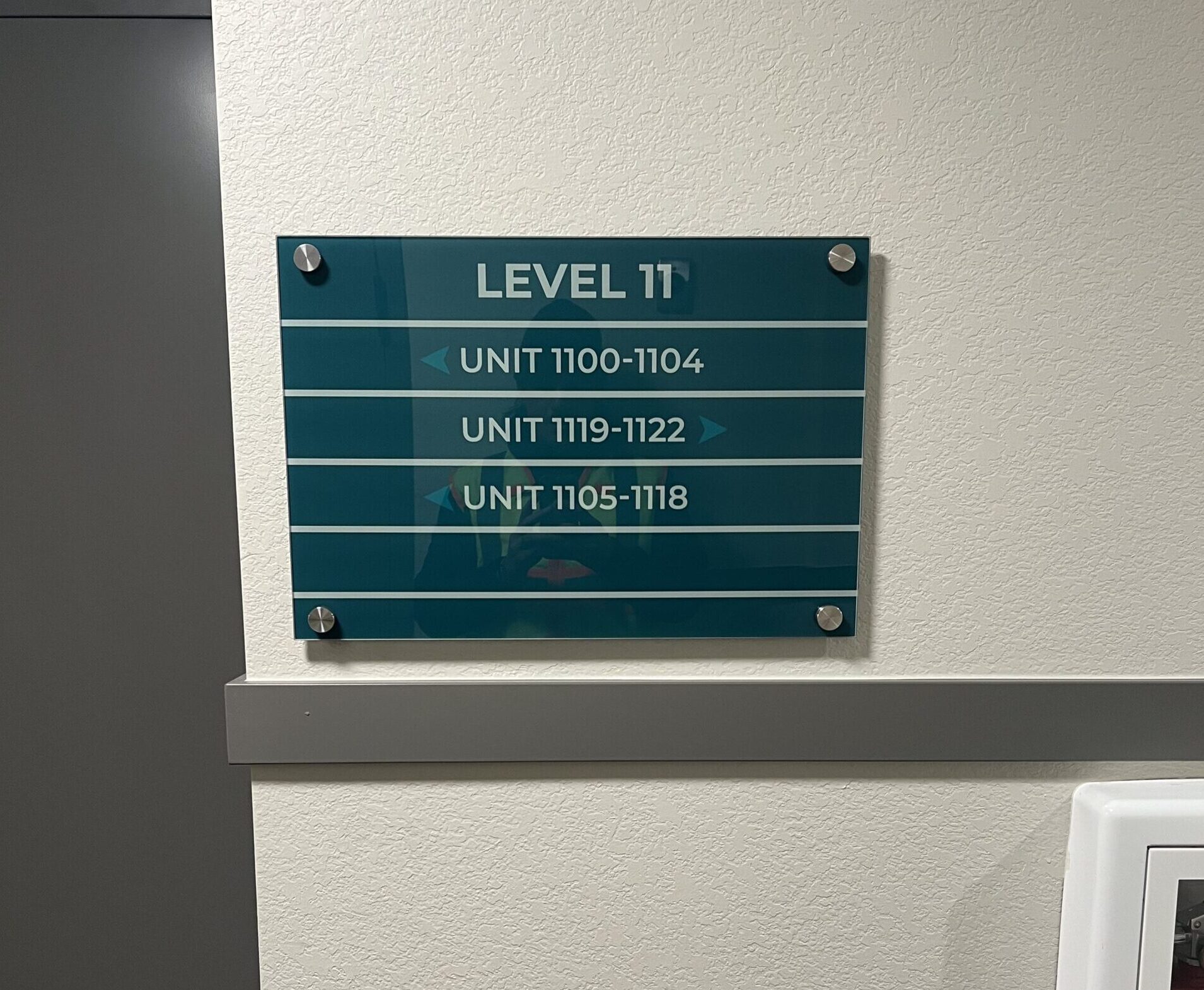
Once a visitor has consulted the directory, a system of directional signs takes over, guiding them from
the lobby to their final destination. Effective directional signage is all about providing the right
information at the right time. This means placing signs at key decision points, such as elevator banks,
hallway intersections, and stairwells.
The design of your directional signs should be consistent with your building’s overall aesthetic and
brand identity. This includes using a consistent color scheme, typography, and iconography throughout
the system. The goal is to create a cohesive and intuitive visual language that is easy for visitors to
follow.
Best Practices for Directory & Directional Signage
Creating an effective wayfinding system involves more than just putting up a few signs. Here are some
best practices to follow:
Keep it Simple: Use clear, concise language and universally recognized symbols. Avoid clutter
and unnecessary information.
Be Consistent: Use the same fonts, colors, and icons throughout the entire system to create a
cohesive experience.
Strategic Placement: Place signs at key decision points where people need to make a choice
about which way to go.
Ensure Readability: Use high-contrast colors and a font size that is easy to read from a distance.
ADA Compliance: Ensure that your signage is fully compliant with the Americans with Disabilities
Act (ADA), including features like Braille and tactile lettering.
Materials and Styles for Directory & Directional Signs
Just like other forms of indoor signage, directory and directional signs are available in a wide range of
materials and styles to match any aesthetic.
For a modern and sleek look, acrylic and aluminum are popular choices. Digital displays offer a
high-tech and easily updatable solution. For a more traditional and upscale feel, materials like brass,
bronze, and wood can be used. The key is to choose materials that align with your building’s
architecture and brand identity.
Common Questions About Wayfinding Signage
How do I know where to place the signs?
Our team conducts a thorough site analysis and walk-through to identify key decision points and create
a comprehensive wayfinding plan. We map out the visitor journey from the moment they enter the
building to the moment they arrive at their destination.
Can you update our existing directory?
Yes, we can often work with existing directory systems to update nameplates or create new inserts. If
your system is outdated, we can recommend a modern, modular solution that is easy to update in the
future.
What is the process for creating a wayfinding system?
Our process begins with a consultation and site analysis. We then move on to design, where we create
a custom wayfinding plan and sign designs. Once the designs are approved, we handle all aspects of
fabrication and professional installation.
Partner with Denver’s Wayfinding Experts
A well-designed wayfinding system is a smart investment that pays dividends in the form of enhanced
visitor experience, improved tenant satisfaction, and a stronger brand image. At Mtn High Sign +
Design, we specialize in creating custom directory and directional signage systems for a wide range of
properties in the Denver area.
Ready to create a seamless and positive visitor experience? Schedule your free consultation today and
let our team of experts design a wayfinding system that works for you.