
If you’re opening a new office, renovating a commercial property, or simply need to bring your Denver business into compliance, understanding ADA signage requirements can feel overwhelming. The good news is that getting it right doesn’t have to be complicated. ADA signs in Denver ensure your business is accessible to everyone, protect you from costly violations, and demonstrate your commitment to inclusivity. Whether you’re a property manager in the Denver Tech Center, a restaurant owner in RiNo, or overseeing a multifamily development in Aurora, this guide will walk you through everything you need to know about ADA compliant signage in Denver, Colorado.
What Are ADA Signs and Why Do Denver Businesses Need Them?
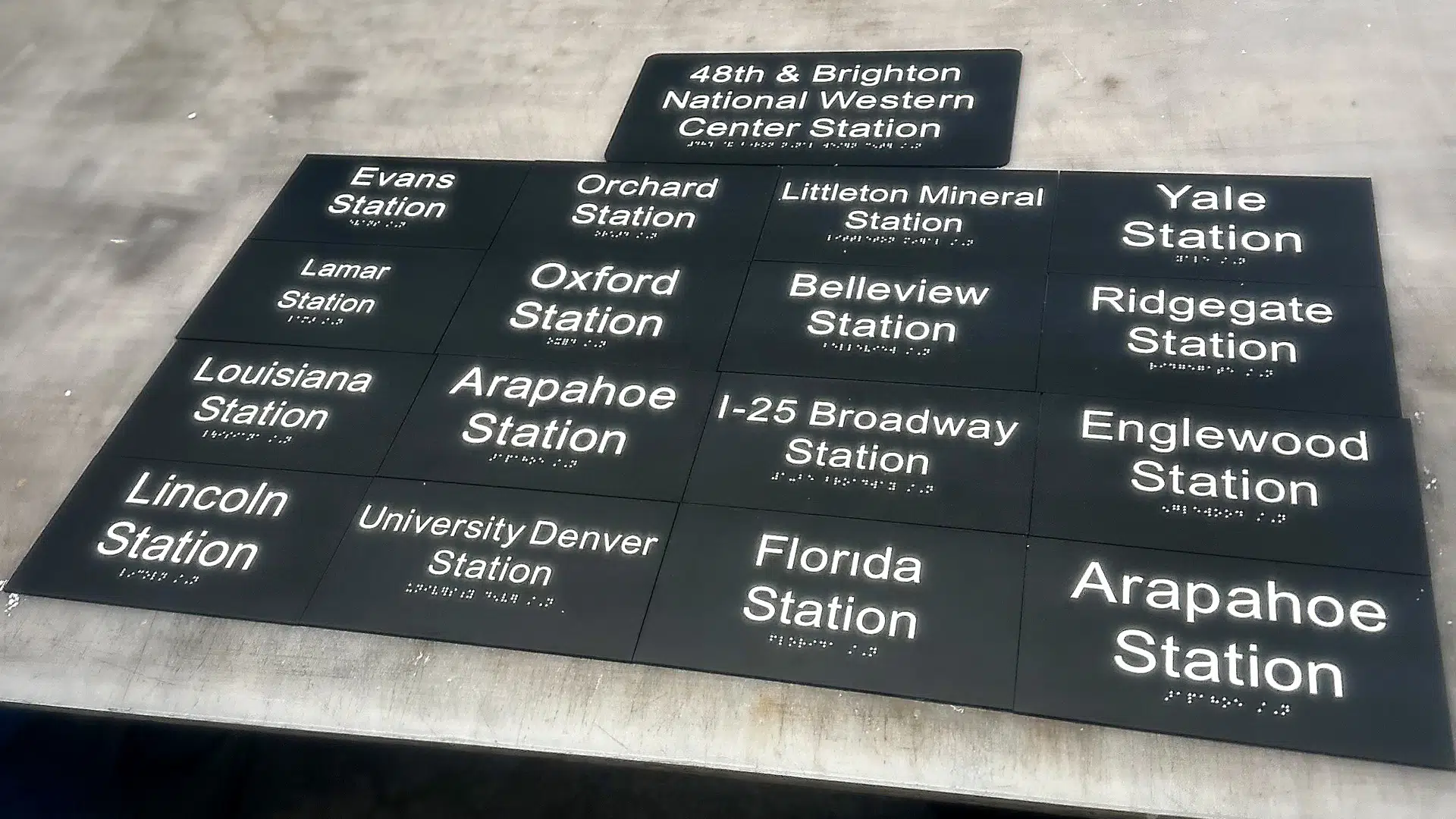
ADA signs are specialized signage designed to meet the accessibility standards set by the Americans with Disabilities Act. These signs use raised characters, Braille, high-contrast colors, and non-glare finishes to ensure that people with visual impairments or other disabilities can navigate your space safely and independently. In Denver, ADA signage isn’t optional. It’s a federal legal requirement for all commercial buildings, multifamily housing, healthcare facilities, and public spaces.
The consequences of non-compliance can be serious. Businesses that fail to meet ADA standards risk lawsuits, fines, and failed building inspections. More importantly, inaccessible signage creates barriers for customers, tenants, and employees with disabilities. By investing in proper ADA signs for your Denver property, you’re not just checking a box for compliance. You’re creating a welcoming, functional environment for everyone who walks through your doors.
Understanding Federal ADA Requirements vs. Denver Building Codes
When it comes to ADA signage in Denver, you need to comply with both federal ADA standards and local Denver building codes. The federal ADA establishes the baseline requirements that apply nationwide, while Denver’s building codes may add additional specifications or clarifications. Here’s what you need to know about both.
Federal ADA standards require that all permanent room identification signs include tactile characters and Grade 2 Braille. Tactile characters must be raised between 1/32 inch and meet specific size requirements, typically ranging from 5/8 inch to 2 inches in height depending on viewing distance. The characters must be sans serif, uppercase, and accompanied by Braille positioned directly below the corresponding text. All ADA signs must also feature high contrast between the text and background, with a non-glare matte or eggshell finish to ensure readability for people with low vision.
Denver building codes generally align with federal ADA standards but emphasize proper installation and placement during inspections. The City and County of Denver’s Community Planning and Development department reviews signage as part of the building permit process, particularly for new construction and major renovations. Working with a local Denver sign company that understands both federal and local requirements can save you time, money, and headaches during the approval process.
Where Do ADA Signs Need to Be Placed in Denver Commercial Properties?
Proper placement is just as important as the design of the sign itself. ADA standards are very specific about where signs must be mounted, and incorrect placement is one of the most common compliance mistakes we see in Denver businesses.
Permanent room identification signs, such as restroom signs, office numbers, and conference room names, must be mounted on the wall adjacent to the door on the latch side. The sign should be positioned so that a person can approach within 3 inches of the sign without being obstructed by the door swing or any other obstacle. The mounting height is critical. The baseline of the lowest tactile character must be at least 48 inches above the finished floor, and the baseline of the highest tactile character must be no more than 60 inches above the floor. This ensures that the sign is within reach for someone using a wheelchair or mobility device.
Overhead signs, such as directional or informational signs that hang from the ceiling, do not require tactile characters or Braille because they are not meant to be touched. However, they must still meet visual accessibility requirements, including high contrast and appropriate text sizing based on viewing distance. Exit signs, stairwell identification, and elevator signage all have their own specific ADA requirements as well.
For Denver businesses in multifamily housing, every unit number, amenity room, and common area must have compliant ADA signage. In corporate offices, every conference room, restroom, break room, and permanent workspace should be clearly marked. Healthcare facilities have even more extensive requirements, including directional wayfinding systems that guide patients through complex floor plans.
Choosing the Right Materials for ADA Signs in Denver
The materials you choose for your ADA signs impact both compliance and longevity, especially in Denver’s unique climate. While the ADA does not mandate specific materials, it does require that signs have a non-glare finish and maintain their tactile and visual characteristics over time.
Acrylic is one of the most popular materials for interior ADA signs in Denver. It’s durable, cost-effective, and can be customized with a wide range of colors and finishes to match your brand. Acrylic signs can be engraved or screen-printed with raised text and Braille, and they maintain their appearance for years with minimal maintenance. Metal signs, such as brushed aluminum or stainless steel, offer a premium look and are ideal for upscale office buildings, hotels, and corporate headquarters in downtown Denver or Cherry Creek. Metal signs are also highly durable and resistant to wear, making them a smart long-term investment.
Wood and wood composite materials are less common for ADA signs but can be used in certain applications, particularly in rustic or mountain-themed properties. However, wood requires more maintenance and may not hold up as well in high-traffic areas. Regardless of the material you choose, the key is to work with a sign company that understands ADA specifications and can ensure that the raised characters, Braille, contrast, and finish all meet federal standards.
Common ADA Signage Mistakes Denver Businesses Make
Even with the best intentions, many Denver businesses make avoidable mistakes when it comes to ADA signage. Here are the most common pitfalls and how to avoid them.
One frequent error is mounting signs in the wrong location. We often see signs placed on the door itself, directly above the door frame, or on the wrong side of the door. Remember, ADA signs must be on the latch side of the door, mounted on the wall, not the door. Another common mistake is incorrect mounting height. Signs that are too high or too low fail to meet accessibility standards and will be flagged during inspections.
Using the wrong font or character style is another issue. ADA signs must use sans serif, uppercase letters. Decorative fonts, script, or italic characters are not compliant. Similarly, the Braille must be Grade 2 Braille and positioned correctly below the corresponding text. We’ve seen cases where businesses ordered custom signs online without realizing the Braille was incorrect or missing entirely.
Insufficient contrast is also a problem. The ADA requires a high contrast ratio between the text and the background, typically a light-on-dark or dark-on-light combination. Signs with low contrast, such as gray text on a white background, may not meet the standard. Finally, using glossy or reflective finishes creates glare, making the sign difficult to read for people with low vision. Always choose a matte or eggshell finish.
How Mtn High Sign + Design Simplifies ADA Compliance in Denver
Navigating ADA requirements doesn’t have to be stressful. At Mtn High Sign + Design, we’ve helped hundreds of Denver businesses, property managers, and developers achieve full ADA compliance with signage that’s both functional and beautifully designed. Our Design, Build, and Install process takes the guesswork out of the equation.
We start with a consultation to assess your property and identify all the locations where ADA signs are required. We’ll measure your space, review your floor plans, and provide recommendations based on both federal ADA standards and Denver building codes. Our design team then creates custom ADA signs that meet all compliance requirements while reflecting your brand’s style and aesthetic. Whether you’re looking for sleek acrylic signs for a modern tech office or elegant metal signs for a luxury multifamily property, we have the expertise and materials to bring your vision to life.
Once the signs are fabricated, our experienced installation team ensures that every sign is mounted at the correct height, in the correct location, and ready to pass inspection. We handle all the details so you can focus on running your business. And because we’re a local Denver company, we understand the unique needs of businesses in neighborhoods like LoDo, the Denver Tech Center, Capitol Hill, and beyond.
ADA Signs Denver FAQs
What are the ADA sign height requirements in Denver?
ADA signs must be mounted so that the baseline of the lowest tactile character is at least 48 inches above the floor, and the baseline of the highest character is no more than 60 inches above the floor.
Do all signs in my Denver business need to be ADA compliant?
No. Only permanent room identification signs require tactile characters and Braille. Directional signs, overhead signs, and temporary signs have different requirements and may not need Braille.
How much do ADA compliant signs cost in Denver?
The cost varies based on size, material, and quantity. A single ADA room sign typically ranges from $40 to $150, while a full signage package for a commercial building can range from $2,000 to $10,000 or more depending on the scope of the project.
Can I install ADA signs myself, or do I need a professional?
While you can technically install ADA signs yourself, improper placement is one of the most common compliance mistakes. Working with a professional sign company ensures correct installation and helps you avoid costly errors during inspections.
Partner with Denver’s ADA Signage Experts
ADA compliance is more than a legal requirement. It’s an opportunity to create a space that’s welcoming, accessible, and inclusive for everyone. Whether you’re preparing for a building inspection, renovating an existing property, or starting a new construction project in Denver, Mtn High Sign + Design is here to help. Our team of experts will guide you through every step of the process, from initial consultation to final installation, ensuring that your ADA signage meets all federal and local requirements.
Don’t leave compliance to chance. Schedule a consultation with Mtn High Sign + Design today and discover how easy it can be to get ADA signage right the first time.