
What are the best wayfinding signs for Denver businesses?
The best wayfinding signs in Denver combine clear directional messaging, ADA-aware placement, durable materials, and brand-consistent design. Offices, apartments, hospitals, campuses, and commercial properties need signs at decision points: entrances, elevators, hallway turns, lobbies, parking areas, restrooms, exits, and suite corridors.
Denver wayfinding signs make buildings easier to navigate and easier to trust
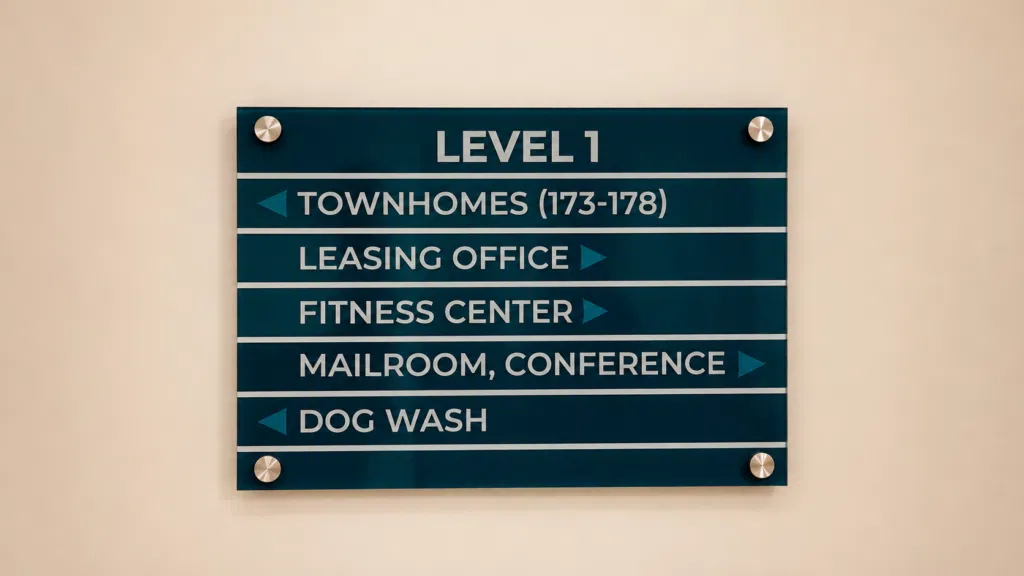
Wayfinding signs help people understand where they are, where they need to go, and what to do next. In a Denver office building, that may mean guiding visitors from the parking lot to the lobby, from the elevator to a tenant suite, or from a hallway intersection to the correct department. In an apartment community, it may mean directing residents and guests to leasing, mailrooms, amenities, garages, elevators, and building numbers.
For hospitals, clinics, schools, business parks, and campuses, wayfinding is more than convenience. Poor directional signage can create late appointments, frustrated visitors, unnecessary front-desk interruptions, and safety issues during emergency situations.
Mtn High Signs + Design creates wayfinding systems for Denver-area businesses that need more than generic arrows on a wall. As a full-service local sign shop, the team can support planning, design, fabrication, installation, and related signage needs including ADA signage, lobby signage, exterior identification, monument signs, and custom interior signs.
If your building has confusing hallways, unlabeled turns, multiple entrances, or visitors asking the same navigation questions every day, it is time to review your wayfinding system.
Need wayfinding signs for a Denver office, apartment complex, medical facility, or campus? Start with a custom signage plan from Mtn High Signs + Design. Their team can help align your directional signs with your brand, building layout, accessibility needs, and visitor flow.
A complete wayfinding system covers every major decision point
Good wayfinding signs are not placed randomly. They belong at the moments where a visitor has to make a decision.
For most Denver commercial properties, that includes:
1. Property arrival — monument signs, building numbers, entrance signs, parking signs, and leasing or lobby directions.
2. Entry points — lobby directories, reception signs, elevator identification, stair signs, and tenant listings.
3. Vertical movement — elevator directories, floor identification, stairwell signs, and emergency exit signage.
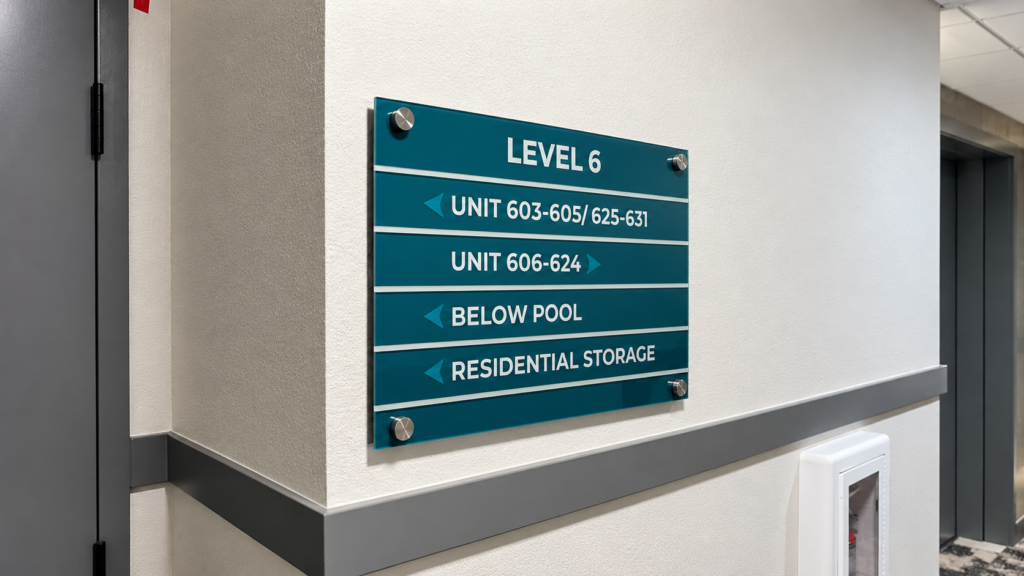
4. Hallway turns — directional signs that show which suites, departments, or amenities are ahead.
5. Destination points — suite signs, restroom signs, conference room signs, amenity signs, and ADA tactile signs.
6. Exit routes — exit signs, stairway signs, evacuation-related signs, and parking return directions.
The most common mistake is stopping after the first sign. A visitor may know which floor to go to when they leave the elevator, but if that floor has multiple hallways, they still need confirmation at the turn.
Operator Insight from Mtn High Signs + Design:
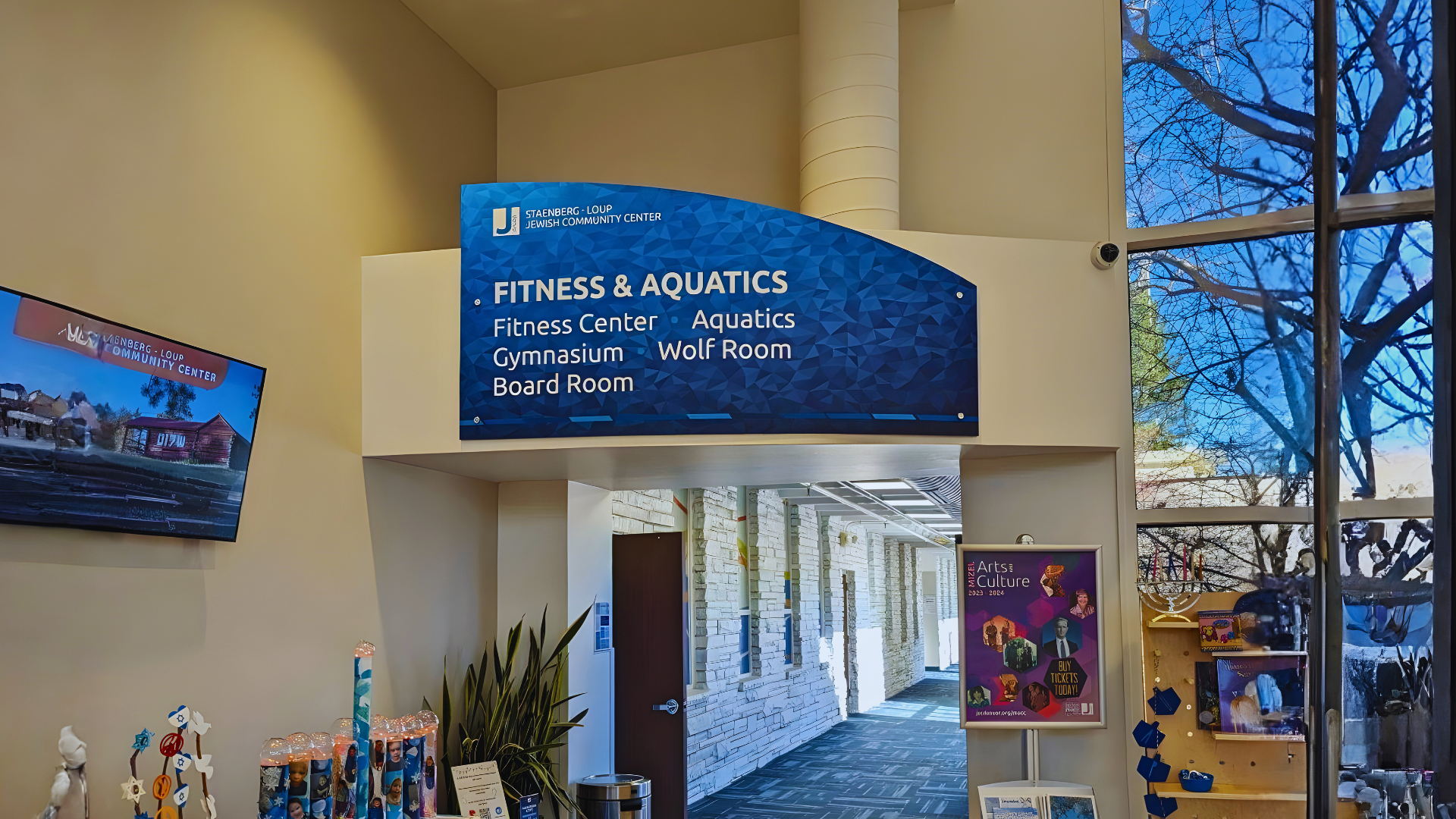
“Wayfinding is an opportunity to support your branding and continue it throughout the building. Designing with your brand colors and fonts helps create a consistent experience. Also, don’t overlook the signs needed when someone turns a corner. A sign when they exit the elevator is great, but if there are multiple hallways, another sign showing which suites are where is always appreciated by visitors.”
Different Denver properties need different wayfinding sign types
The right wayfinding system depends on the property type, traffic pattern, and visitor expectations.
| Sign Type | Best For | Typical Cost Range | Typical Timeline | Permit Requirements |
| Wall-mounted directional signs | Offices, clinics, schools, apartments | $150–$750 per sign | 1–3 weeks | Usually no permit for interior signs |
| Lobby directories | Multi-tenant offices, medical buildings, apartments | $500–$3,500+ | 2–4 weeks | Usually no permit if interior |
| ADA room and restroom signs | Public/commercial interiors | $75–$300+ per sign | 1–3 weeks | Usually no permit, but ADA compliance matters |
| Parking and traffic signs | Apartments, campuses, business parks | $100–$600+ per sign | 1–3 weeks | May require review depending on location and installation |
| Exterior directional signs | Campuses, hospitals, large properties | $500–$5,000+ | 3–8 weeks | May require permit depending on size, placement, and mounting |
| [Monument signs](https://mtnhighsign.com/monument-signs) | Property entrances, business parks, apartment communities | $5,000–$25,000+ | 6–12+ weeks | Often requires permitting |
| Custom branded signs | Offices, retail, multifamily, healthcare | Varies by material and size | 2–6 weeks | Depends on interior vs. exterior placement |
These ranges are general planning numbers. Final pricing depends on material, size, mounting method, quantity, illumination, installation conditions, and whether the project includes site surveys or design development.
Branded wayfinding signs create a more polished visitor experience
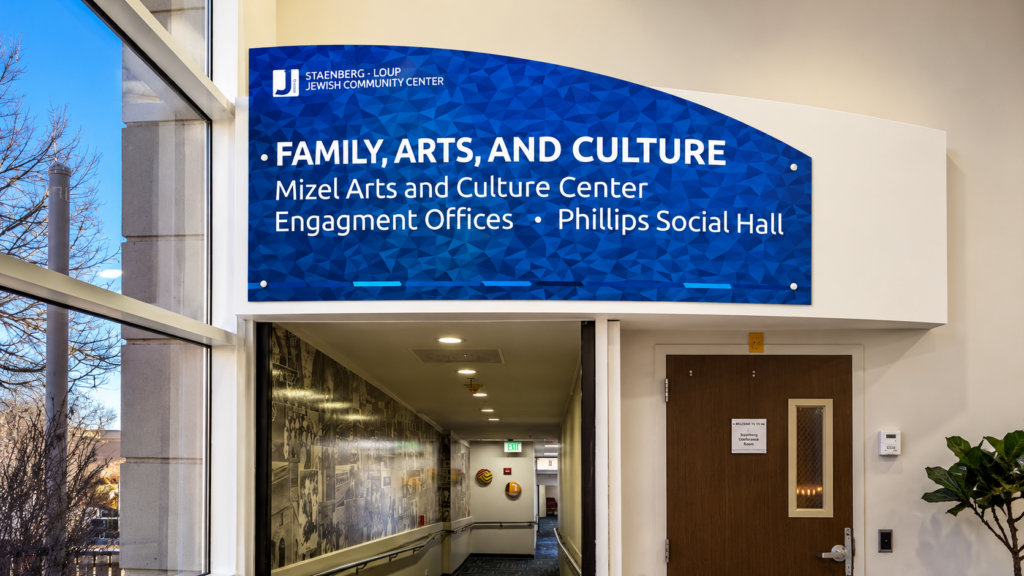
Wayfinding signs should be functional first, but they should not look like an afterthought. A professional signage system can reinforce the identity of a property or organization at every touchpoint.
For example, a Denver apartment community may use the same colors, typography, and icon style across leasing office signs, garage signs, amenity signs, building identification, and resident directional signs. A medical office may need a calmer, higher-contrast system with clear arrows, department names, room numbers, and ADA-compliant tactile signage. A corporate office may want brushed metal, acrylic, dimensional letters, or clean architectural panels that match its lobby design.
This is where sign designs matter. The goal is not simply to make signs visible. The goal is to make navigation feel intentional, consistent, and easy.
Strong wayfinding design should include:
• High contrast between text and background
• Simple directional language
• Consistent arrows and icons
• Legible fonts at the correct viewing distance
• Clear hierarchy between building, floor, suite, and room information
• Materials that match the environment
• Durable finishes for high-traffic areas
• ADA-aware placement where required
Local planning reduces installation problems and visitor confusion
Denver and Front Range properties vary widely: older office buildings, mixed-use developments, medical buildings, apartment communities, retail centers, schools, and multi-building campuses all have different navigation challenges.
A local sign partner can help identify issues that are easy to miss during planning, such as:
• Hallways that look identical from the elevator bank
• Parking areas without clear building return directions
• Suite numbers that are hard to see from a common corridor
• Entrances that are not obvious from the street
• Amenity spaces hidden behind turns or access-controlled doors
• Temporary construction routes that need short-term directional signs
• Exterior signs that may need permitting or landlord approval
Mtn High Signs + Design supports Denver-area businesses with full-service signage, including custom signs for business, interior signs, exterior signs, vehicle graphics, illuminated signs, monument signs, wayfinding, installation, and maintenance. For businesses comparing options, working with a local sign shop can provide more practical site-specific guidance than an online-only sign vendor or generic franchise ordering process.
For broader branding needs, businesses can also connect their wayfinding system with custom signs for business, lobby signs, wall graphics, exterior signs, and tenant identification.
The best wayfinding projects follow a simple planning process
A strong wayfinding project usually follows these steps:
1. Map the visitor journey. Start at the street, parking lot, entrance, lobby, elevator, hallway, and final destination.
2. Identify confusion points. Look for repeated questions, dead ends, unclear turns, and areas where guests hesitate.
3. Define sign categories. Separate exterior signs, directories, directional signs, ADA signs, room IDs, and temporary signs.
4. Create a consistent design system. Use approved brand colors, fonts, icons, arrows, materials, and mounting styles.
5. Confirm compliance needs. Review ADA signage requirements, landlord rules, property standards, and permit requirements.
6. Fabricate and install professionally. Use durable materials, clean mounting methods, and accurate placement.
7. Review after use. Watch how visitors move through the space and add signs where confusion remains.
This process works for offices, apartment complexes, hospitals, campuses, retail centers, and mixed-use properties throughout the Denver metro area.
FAQ
How much do wayfinding signs cost in Denver?
Wayfinding signs in Denver can range from about $75 for simple ADA room signs to several thousand dollars for custom directories, exterior directional signs, or monument-style entrance signage. Most projects depend on the number of signs, materials, design complexity, installation needs, and whether exterior permitting is involved.
Do interior wayfinding signs need permits in Denver?
Many interior wayfinding signs do not require permits, especially wall-mounted directories, room signs, restroom signs, and directional panels. Exterior signs, illuminated signs, large building-mounted signs, and monument signs may require permits or property approvals. A local sign company can help determine what applies before fabrication begins.
What wayfinding signs do apartment complexes need?
Apartment complexes commonly need entrance signs, building numbers, leasing office signs, parking signs, amenity signs, mailroom signs, garage signs, elevator signs, hallway directional signs, unit/suite signs, and ADA signage. Larger communities may also need maps or exterior directional signs to guide visitors and delivery drivers.
What makes healthcare wayfinding different from office signage?
Healthcare wayfinding must be especially clear because patients and visitors may be stressed, late, or unfamiliar with the building. Medical offices and hospitals often need department signs, room signs, restroom signs, elevator directories, ADA tactile signs, high-contrast text, simple icons, and repeated confirmation signs at hallway turns.
Can wayfinding signs match our brand colors and fonts?
Yes. Wayfinding signs can and should match your brand when visibility and readability are preserved. Mtn High Signs + Design can incorporate brand colors, fonts, materials, icons, and finishes so the signage system helps people navigate while reinforcing a consistent professional experience.