
What should apartment owners look for when buying signs for apartment complexes in Littleton, CO?
Choose signage that improves visibility, guides residents and visitors clearly, meets ADA requirements, matches the property’s architecture, and can hold up to Colorado weather. A complete multifamily sign package should include monument signs, building ID signs, directional signs, parking signs, unit markers, ADA signage, and leasing-office branding.
Apartment complex signage works best as a complete property system
Signs for apartment complexes in Littleton, CO need to do more than mark an entrance. A well-planned multifamily signage package helps prospects find the leasing office, visitors locate buildings, delivery drivers navigate the property, residents identify amenities, and management maintain safety and compliance.
For apartment communities in Littleton, Denver, Englewood, Lakewood, Highlands Ranch, and surrounding areas, the most effective sign systems usually include:
• Main entrance monument signs
• Leasing office signs
• Building identification signs
• Unit number and door signs
• Parking and reserved parking signs
• Directional and wayfinding signs
• Pool, fitness center, mailroom, clubhouse, and amenity signs
• ADA signage and tactile room signs
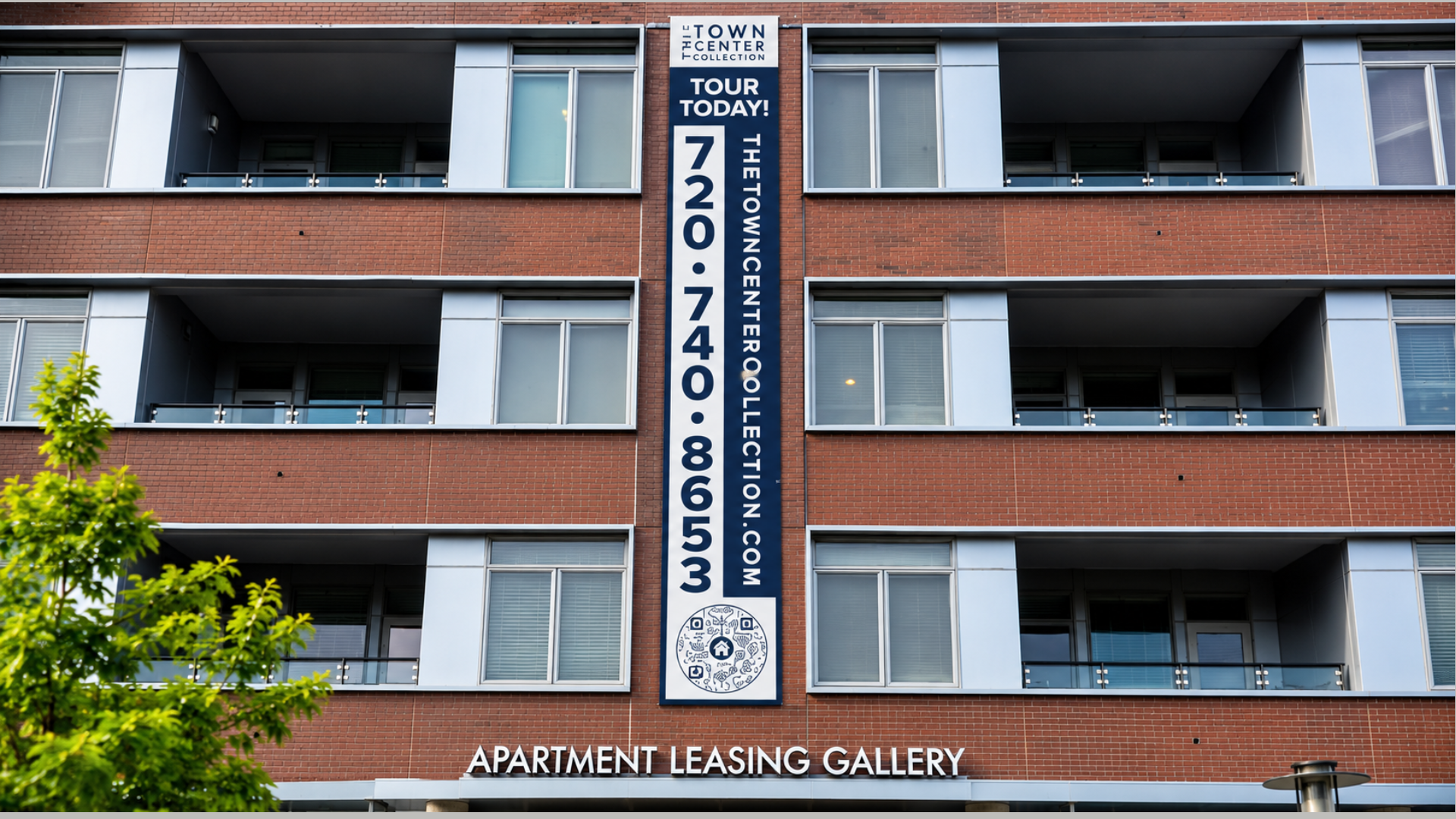
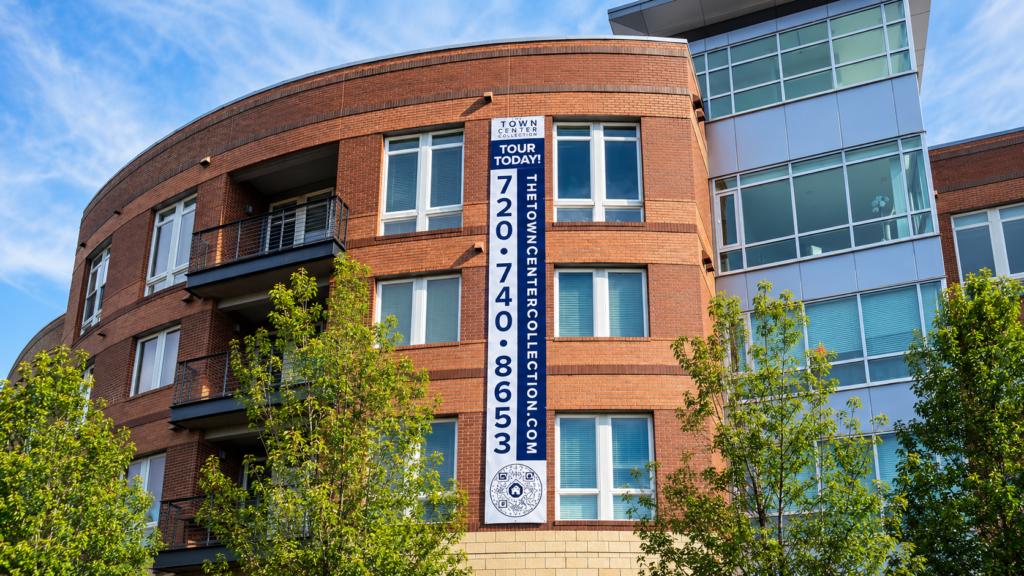
• Temporary banners for business promotions, leasing specials, or property announcements
• Maintenance, safety, pet area, and regulatory signs
A national franchise or online-only sign vendor may be able to sell individual signs, but apartment communities often need a coordinated solution. Mtn High Signs + Design works as a Denver-area full-service sign shop, helping property owners and managers connect design, materials, permitting, fabrication, installation, and long-term usability.
If you are planning new construction, a rebrand, or a property refresh, start with a complete sign inventory—not just the first visible sign at the entrance.
Need a property-wide signage plan? Mtn High Signs + Design can help with signs for apartment complexes Littleton CO, including design, production, installation, and phased sign packages for multifamily communities.
Monument signs create the first impression for multifamily communities
For most apartment complexes, the main monument sign is the highest-value exterior sign on the property. It is often the first brand touchpoint for prospects, residents, delivery drivers, vendors, and guests.
A strong apartment monument sign should:
1. Be visible from the street without overwhelming the property entrance.
2. Match the architecture, materials, and resident demographic of the community.
3. Use durable exterior materials suited for sun, snow, wind, freeze-thaw cycles, and UV exposure.
4. Include illumination when visibility after dark matters.
5. Support the property’s leasing and branding goals.
Apartment communities in Littleton and Denver often use stone bases, fabricated metal, routed panels, dimensional lettering, acrylic faces, or illuminated cabinets depending on budget, property style, and local requirements. For higher-end multifamily properties, monument signs can become architectural features instead of basic identification markers.
Multifamily sign budgets depend on quantity, materials, and design complexity
Apartment signage can become expensive quickly because the project is rarely limited to one sign. A full package may include dozens—or hundreds—of signs across buildings, amenities, parking areas, leasing spaces, and compliance locations.
Operator Insight from Mtn High Signs + Design:
“When a project has 400+ signs, sharing your budget and price point helps us create a design within your budget. If we’re taking a shot in the dark, you may only get a basic sign that covers the essentials. When you treat us like a partner, we can bring more knowledge to the project and create more interesting architectural signage.”
That budget conversation is not about overspending. It is about avoiding mismatched expectations. If a property manager needs a cost-efficient refresh, the sign design should reflect that. If the ownership group wants a premium repositioning after renovations, the materials, finishes, and sign designs should support that goal.
Here are common apartment sign categories and realistic planning ranges:
| Sign Type | Common Use | Typical Cost Range | Typical Timeline | Permit Usually Required? |
| Monument signs | Main property entrance, brand identity | $5,000–$85,000+ | 4–10 weeks | Often yes |
| Building ID signs | Building numbers, exterior identification | $250–$1,500 each | 2–6 weeks | Sometimes |
| ADA signage | Restrooms, leasing office, amenities, accessible routes | $35–$250 each | 2–5 weeks | Usually no, but code compliance required |
| Directional signs | Leasing office, parking, amenities, exits | $150–$1,200 each | 2–6 weeks | Sometimes |
| Parking signs | Reserved, visitor, accessible, fire lane, towing | $75–$500 each | 1–4 weeks | Sometimes |
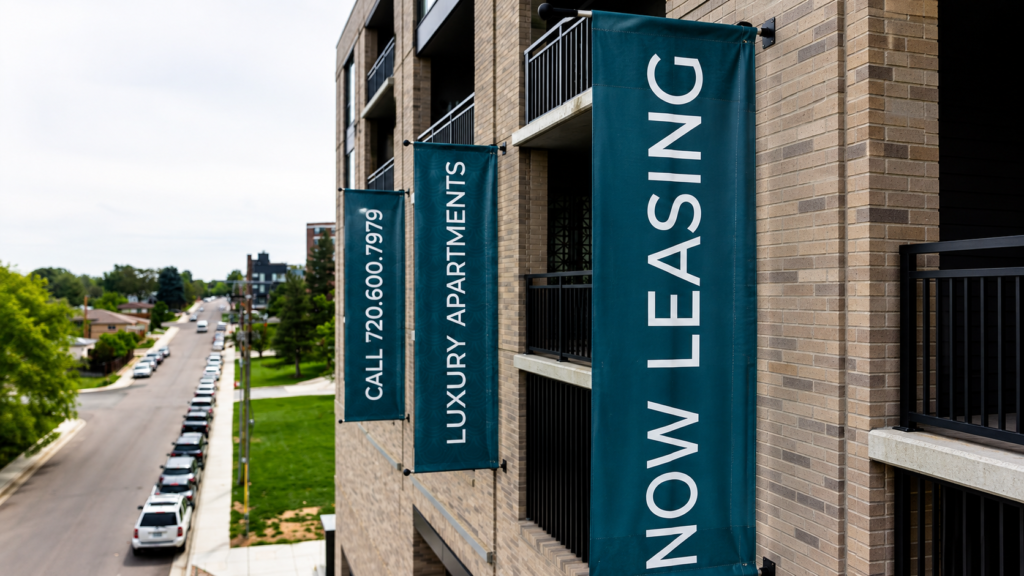
| Leasing banners | Specials, grand opening, now leasing | $150–$1,000+ | 3–10 business days | Sometimes |
| Lobby signs for business areas | Leasing office branding, interior identity | $750–$5,000+ | 2–6 weeks | Usually no |
These ranges vary based on size, material, installation access, illumination, engineering, and local code requirements.
ADA signage and wayfinding improve resident experience and compliance
Apartment complexes need clear, consistent navigation. Residents should not struggle to find the mailroom, clubhouse, fitness center, elevator, stairwell, parking garage, leasing office, or building entrance. Visitors and emergency responders also benefit from a well-organized sign system.
ADA signage is especially important for multifamily properties with public or shared spaces. Leasing offices, restrooms, community rooms, accessible routes, elevators, and amenities may require compliant tactile signs, Braille, proper mounting height, contrast, and placement.
Mtn High Signs + Design helps property teams coordinate ADA signage with the rest of the visual system so required signs do not feel like an afterthought. Good compliance signage can still look polished, professional, and consistent with the property brand.
For larger apartment communities, wayfinding should be planned around actual movement patterns:
• How do prospects enter from major roads?
• Where do rideshare drivers and delivery vehicles stop?
• Which buildings are hardest to locate at night?
• Are parking areas clearly marked?
• Can emergency responders identify buildings quickly?
• Do amenity signs match leasing materials and online branding?
The goal is simple: fewer confused visitors, fewer resident complaints, and a cleaner property experience.
Local permitting and installation planning prevent costly delays
Sign permits in Littleton, Denver, and neighboring municipalities depend on sign type, size, placement, illumination, zoning, and whether the sign is permanent or temporary. Monument signs and illuminated exterior signs are more likely to require permits than small interior signs. Temporary banners may also have restrictions depending on location and duration.
A smart project sequence looks like this:
1. Site review: Identify entrances, buildings, amenities, parking zones, visibility issues, and existing signs.
2. Sign inventory: Create a list of every sign needed by type, quantity, size, and priority.
3. Budget alignment: Decide whether the project is a basic replacement, phased upgrade, or full architectural rebrand.
4. Design development: Match materials, colors, typography, and mounting methods to the property.
5. Permit review: Confirm which exterior signs need municipal approval.
6. Fabrication: Produce approved signs using durable materials suited for Colorado conditions.
7. Installation: Coordinate access, mounting surfaces, tenant disruption, and safety.
8. Maintenance planning: Replace damaged panels, update leasing messages, and refresh signs as needed.
This is where a local sign partner matters. Installation conditions in a Denver-area apartment complex are not theoretical. Snow, wind, irrigation, masonry, stucco, landscaping, underground utilities, lighting, and vehicle traffic can all affect the final result.
Custom sign designs help apartment communities stand out in competitive leasing markets
Littleton and Denver renters compare properties quickly. Before they tour a unit, they see the entrance sign, leasing office, parking layout, exterior upkeep, and amenity presentation. Strong signage supports trust before a prospect speaks with the leasing team.
For repositioned or renovated communities, custom business sign planning can help signal a higher-value resident experience. That may include upgraded monument signs, refreshed building IDs, more polished leasing office signs, or personalized business signs for branded amenities such as coworking rooms, fitness centers, dog wash stations, lounges, and package rooms.
Mtn High Signs + Design also supports related property branding needs, including vehicle graphics for maintenance fleets, illuminated signs, business outdoor signs, custom metal plaque options, lobby signs for business offices, and bilingual signage such as letreros para negocios when appropriate for the community.
The best sign designs are not just decorative. They reduce confusion, increase perceived property value, and make the leasing experience feel more professional.
FAQ
What signs does an apartment complex usually need?
Most apartment complexes need monument signs, building identification signs, directional signs, ADA signage, parking signs, amenity signs, leasing office signs, unit markers, safety signs, and temporary banners for leasing promotions. Larger communities may also need garage signage, package room signs, pet area signs, and illuminated signs.
How much do signs for apartment complexes in Littleton, CO cost?
Small replacement signs may cost under a few hundred dollars each, while full multifamily sign packages can range from several thousand dollars to well over $50,000 depending on quantity, materials, illumination, installation, and permitting. Projects with 100–400+ signs should begin with a budget conversation and complete sign inventory.
Do apartment monument signs require permits in Littleton or Denver?
Many permanent exterior monument signs require permits, especially if they are large, illuminated, freestanding, or located near public streets. Requirements vary by municipality, zoning district, size, placement, and sign type. A local sign shop can help review likely permit needs before fabrication begins.
What materials work best for apartment signs in Colorado weather?
Common durable materials include aluminum, fabricated metal, acrylic, routed panels, high-pressure laminate, vinyl graphics, stone bases, and powder-coated finishes. Exterior signs should be designed for UV exposure, snow, wind, temperature swings, and long-term maintenance.
When should apartment owners involve a sign company in a renovation or new build?
Bring in a sign company early—ideally during planning, branding, or construction coordination. Early involvement helps align budget, code requirements, mounting conditions, electrical needs, architectural style, and installation timing before decisions become expensive to change.