

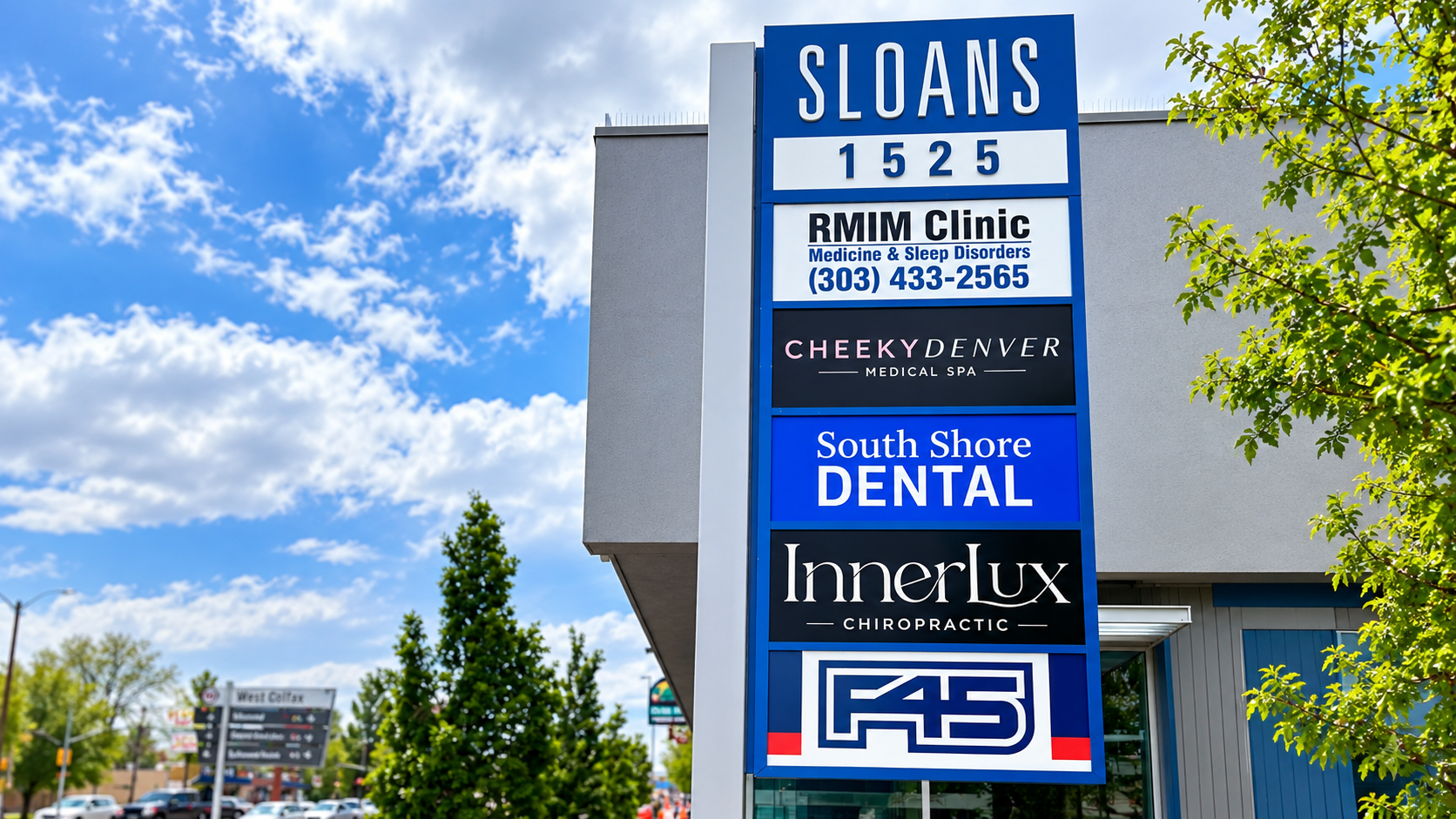
What should property owners know before ordering or updating a pylon sign?
Pylon signs give shopping centers and commercial properties high roadside visibility, but successful projects depend on more than sign height. Owners must account for tenant-panel capacity, readable sign designs, local zoning, structural conditions, electrical service and future replacements. Planning those details early prevents expensive redesigns and operational delays.
Pylon Signs Create Roadside Visibility for Multi-Tenant Properties
A pylon sign is a freestanding exterior sign supported by one or more poles or an enclosed structural base. Its elevated position helps drivers identify a property before reaching its entrance, making it especially useful for shopping centers, office complexes, industrial parks and other developments set back from the road.
Multi-tenant pylon signs typically combine a property name or anchor brand with individual tenant panels. The objective is not to fit every possible message onto the structure. It is to create a visual hierarchy that helps motorists answer three questions quickly:
1. Is this the property I need?
2. Is my destination located here?
3. Where should I enter?
Pylon signs and monument signs are both freestanding options, but they serve different site conditions. Pylon signs generally provide greater elevation for visibility across large parking lots or along faster roads. Monument signs sit closer to the ground and often emphasize an architectural connection to the property.
Tenant Panels Work Best When Legibility Controls the Design
A tenant panel is not a miniature storefront sign. Drivers may have only a few seconds to notice the pylon, locate a tenant and react safely. Overly detailed logos, thin lettering and crowded panels weaken that function.
Effective tenant-panel design prioritizes:
• Strong contrast between the copy and background
• Letterforms that remain clear at the intended viewing distance
• Consistent panel dimensions and spacing
• Simplified logos that retain brand recognition
• A hierarchy that distinguishes the property or anchor tenant
• Illumination appropriate to the site’s evening traffic
Panel allocation also deserves early attention. A property manager should decide whether every tenant receives equal space, anchor tenants receive larger panels, or vacancies remain available for future occupants. A flexible panel system can reduce the cost and disruption of future tenant turnover.
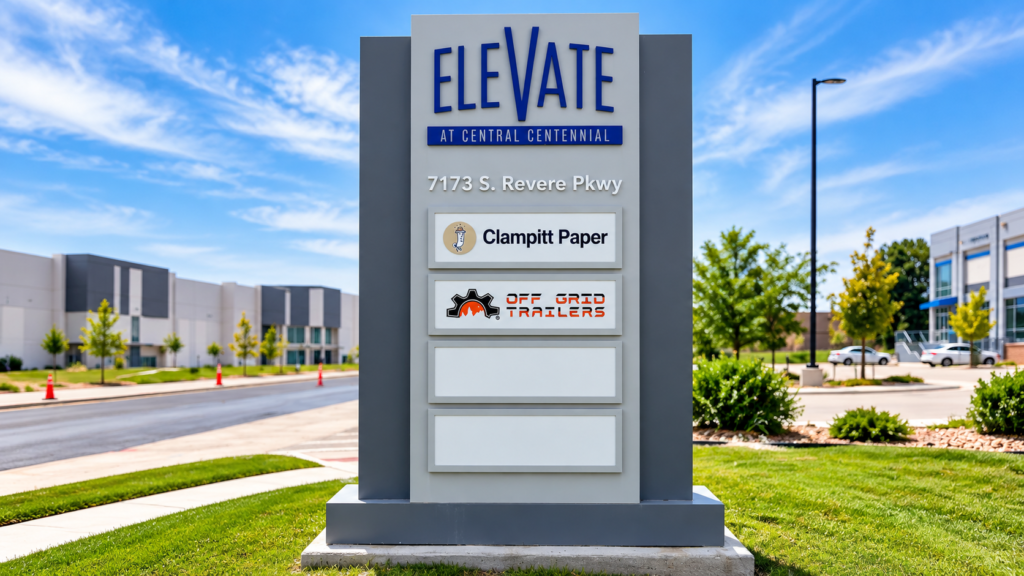
Planning a new multi-tenant sign or replacing an aging structure? Mtn High Signs + Design can coordinate the sign design, permitting, fabrication, installation and ongoing maintenance as one Denver-area project. Start by reviewing the property’s visibility needs alongside its custom signs for business options.
Materials, Size and Construction Determine the Real Investment
The visible face of a pylon sign is only one part of the project. Foundations, internal supports, cabinets, cladding, tenant panels, lighting and installation access all affect the scope.
Mtn High Signs + Design regularly sees property owners underestimate the difference that material and construction choices make:
A 15-foot monument-style sign with a stone base and pillars is a very different investment from a 15-foot stucco-finished structure with vinyl lettering. Both can be effective, but the materials and fabrication requirements create substantially different costs. Establishing a budget first allows the design team to recommend realistic options.
A useful budget conversation should cover:
• New construction versus reuse of an existing structure
• Overall height and sign-face area
• Masonry, stone, stucco, metal or other architectural finishes
• Internally illuminated cabinets versus non-illuminated panels
• Electrical repair or replacement
• Foundation and structural requirements
• Access for installation equipment
• The expected frequency of tenant changes
• Long-term cleaning and maintenance needs
This approach produces a better result than selecting an appearance first and discovering later that it exceeds the property’s practical investment range.

Replacement Projects Require More Than New Graphics
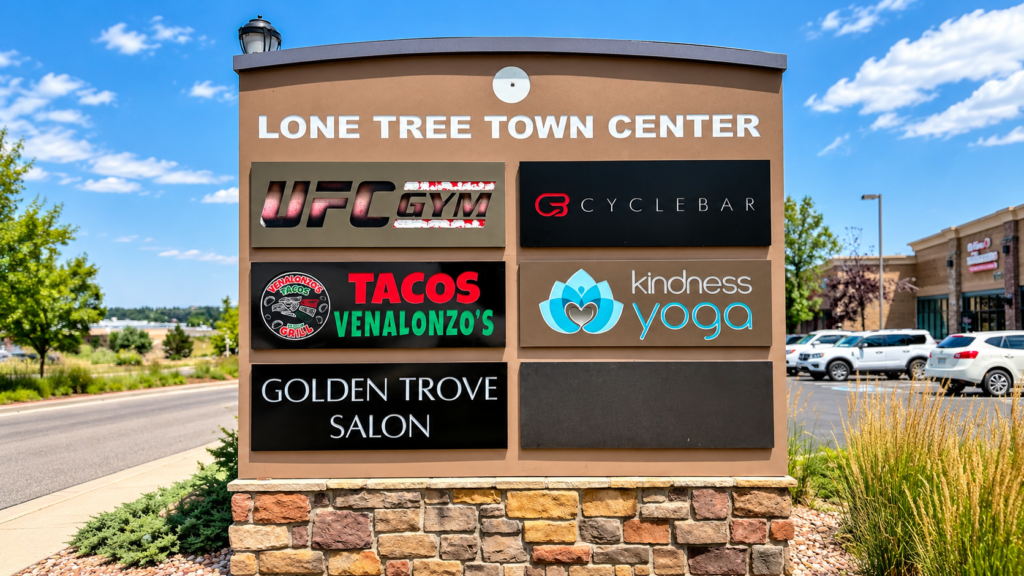
Replacing a tenant panel may appear straightforward, but the new face must fit the existing cabinet, attachment method and lighting system. Color and material choices must also account for how the panel appears during both daylight and nighttime illumination.
Before approving a replacement, document:
1. The exact panel dimensions and depth
2. Existing attachment points and retainers
3. Whether the panel is flat, formed or routed
4. The illumination source and its condition
5. The approved tenant logo and colors
6. Landlord or property-management design standards
7. Safe access for removal and installation
Older structures may contain faded panels, inconsistent lighting, damaged faces or obsolete electrical components. In those cases, replacing one tenant panel without assessing the full sign can create visible color differences or leave underlying maintenance problems unresolved.
Denver-Area Permitting Must Be Verified Before Fabrication
Sign regulations differ across Denver and surrounding Front Range municipalities. A design that is acceptable in one jurisdiction may require changes in another. Applicable rules may address allowable height, sign area, setbacks, placement, illumination and proximity to property lines or rights-of-way.
The property may also be subject to a master sign plan, development agreement, landlord criteria or private architectural standards. Existing signs should not automatically be assumed compliant simply because they are already installed; modifications can trigger additional review.
A dependable preproduction sequence is:
1. Confirm the property address and governing jurisdiction.
2. Review zoning and property-specific sign criteria.
3. Survey existing conditions and utilities.
4. Develop the sign concept within identified constraints.
5. Obtain landlord or association approval when required.
6. Complete permit and engineering steps applicable to the project.
7. Release the approved design for fabrication and installation.
A full-service local sign shop can manage these connected stages, reducing the risk of fabricating a sign that cannot be approved or installed as designed.
The Best Pylon Sign Plan Accounts for Future Tenant Changes
A multi-tenant pylon is a long-term property asset. Its structure may remain in place through many leasing cycles, so the initial design should make future updates predictable.
Before approving a system, ask whether replacement panels can be reproduced efficiently, whether brand standards are documented and whether service crews can reach lighting and electrical components safely. Property managers should also retain approved artwork, color specifications and panel measurements.
Coordinating the pylon with building identification and sign designs across the property creates a more consistent visitor experience. The roadside sign attracts attention; storefront, directional and wayfinding signs then guide customers to the correct destination.
Frequently Asked Questions Address Common Pylon Sign Decisions
What is the difference between a pylon sign and a pole sign?
The terms are sometimes used interchangeably. A pole sign often has a visible single support, while a pylon sign may use one or more supports concealed within a larger architectural enclosure. Both are elevated freestanding signs intended to improve roadside visibility.
Can one tenant panel be replaced without rebuilding the entire sign?
Often, yes. The existing cabinet, panel dimensions, attachment system, illumination and structural condition must be inspected first. If those components remain serviceable, a new panel can usually be designed and fabricated to fit the current system.
Do pylon signs require permits in the Denver metro area?
New pylon signs and many substantial alterations typically require local review. Requirements depend on the municipality, zoning district, property and project scope. Confirm the applicable rules before fabrication rather than relying on requirements from another city or an older installation.
How should a property owner budget for a pylon sign?
Begin with the investment range the property can support, then evaluate height, size, materials, architectural finishes, illumination, structural work and installation conditions. Sharing the budget early helps the sign company develop options that align visibility goals with realistic construction choices.