
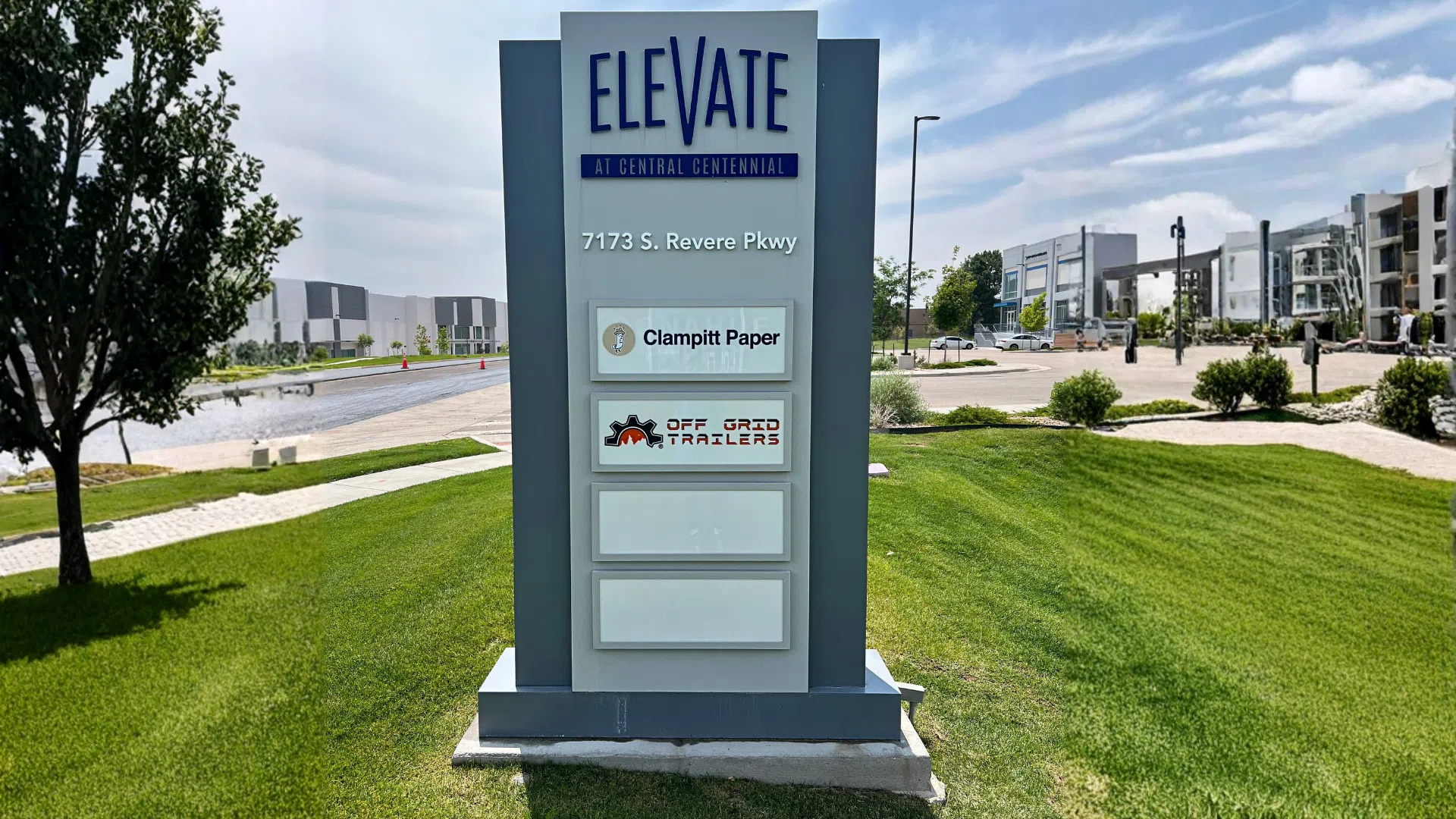
A monument sign is a freestanding exterior sign that sits low to the ground, designed to build brand authority and capture the attention of passing traffic. For businesses in Denver, from corporate campuses in the Tech Center to retail centers in Cherry Creek, a high-quality monument sign is often the first physical interaction a prospect has with your brand.
Here is the bottom line: well-designed monument signs increase visibility, elevate property value, and signal permanence to your target audience. Because they are installed at eye level, they provide a direct line of sight for motorists and pedestrians alike. However, navigating Denver’s specific zoning regulations, material choices, and illumination options requires local expertise. This guide breaks down everything you need to know to make an informed investment in your property’s most important exterior asset.
The Financial Impact of Freestanding Signage
On-premise signage, particularly freestanding monument signs, delivers a measurable return on investment by acting as a 24/7 marketing asset. The International Sign Association reports that businesses adding a new freestanding sign experience an average revenue increase of 4.75% to 15.6%.
What this means for your business is that a monument sign is not just an architectural expense; it is a revenue-generating tool. Unlike digital advertising that stops working the moment your budget runs out, a monument sign provides continuous impressions for decades. For a Denver retail plaza or medical clinic, capturing just a fraction of the daily traffic on busy corridors like Colorado Boulevard or Hampden Avenue quickly offsets the initial fabrication and installation costs.
Denver Zoning and Permitting Requirements
The City and County of Denver requires a building permit for all permanent monument signs, with strict regulations governing height, setback, and visibility triangles. Securing these permits is the most critical first step, as non-compliant signs face costly fines or forced removal.
Navigating the Denver zoning code requires precision. For example, signs located near intersections must not exceed 30 inches in height within the designated visibility triangle to ensure traffic safety. Setback requirements dictate how close the structure can be to the property line or public right-of-way. Partnering with a local Denver sign company ensures that your design is compliant from day one. We handle the entire permitting process, from submitting engineered drawings to coordinating final city inspections, keeping your project on schedule.
Choosing the Right Materials for Colorado Weather
High-density urethane (HDU) foam is currently the most popular core material for modern monument signs because it is impervious to rot, immune to Denver’s freeze-thaw cycles, and can be crafted to mimic expensive stone or brick at a fraction of the weight.
Durability is non-negotiable when building exterior signs in Colorado. While traditional masonry—using real brick, river rock, or poured concrete—offers unmatched permanence, modern alternatives provide incredible versatility. HDU can be hard-coated and textured to match your building’s exact architectural style. We frequently incorporate architectural-grade aluminum and steel accents for a contemporary look, particularly popular in the Denver Tech Center. The key takeaway is that your material choice dictates both the lifespan of the sign and how accurately it reflects your brand’s premium positioning.
Illumination Options for Maximum Visibility
Internally illuminated monument signs utilize energy-efficient LED modules to ensure your brand remains highly visible and legible during Denver’s long winter nights. Proper lighting transforms a static structure into a 24-hour beacon.
There are several ways to illuminate your monument sign. Push-through acrylic letters create a sophisticated, glowing 3D effect against an opaque metal face. Halo-lit (or reverse-lit) dimensional letters cast a soft wash of light against the sign’s backing, offering a premium, high-end aesthetic. For a more traditional approach, external landscape lighting can be positioned to wash the entire structure in light. LEDs are the industry standard across all these methods, providing brilliant illumination while significantly reducing energy consumption and maintenance costs compared to older fluorescent or neon technologies.
A Denver Tech Center Success Story
When a multi-tenant corporate park in the Denver Tech Center needed to upgrade its outdated, hard-to-read entrance sign, the goal was to modernize the property and improve tenant visibility. The original wooden structure was weathering poorly and lacked illumination.
We designed and fabricated a modern, dual-sided monument sign featuring a brushed aluminum cabinet and an HDU base textured to match the surrounding retaining walls. We integrated push-through acrylic lettering for the primary property name and easily changeable, internally illuminated tenant panels below. The result was a dramatic upgrade in curb appeal that helped the property management group secure two new high-value leases within months of installation, proving that premium exterior signage directly impacts perceived property value.
Frequently Asked Questions About Monument Signs
How much does a custom monument sign cost in Denver?
The cost varies widely based on size, materials, and illumination, typically ranging from $5,000 for a basic non-illuminated HDU sign to $20,000+ for large, complex masonry structures with custom LED lighting.
How long does it take to build and install a monument sign?
From initial design approval to final installation, the process generally takes 6 to 10 weeks. This timeline includes the city permitting process, which can take several weeks depending on current municipal backlogs.
Can you match the brick or stone on my existing building?
Yes. We can either use actual matching masonry materials or utilize hard-coated high-density urethane (HDU) meticulously painted and textured to seamlessly replicate your building’s existing architecture.
Do I need a permit to update the tenant panels on an existing sign?
Generally, if you are only changing the flat acrylic or metal tenant faces within an existing, permitted sign cabinet—without altering the structure or electrical components—a new building permit is not required.
Elevate Your Property with Denver’s Signage Experts
Your monument sign is the anchor of your exterior branding. Don’t leave your property’s first impression to chance. Whether you are developing a new commercial site or upgrading an aging structure, our team delivers end-to-end service—from custom design and engineering to permitting and flawless installation.