
What should Denver businesses know before buying a monument sign?
Monument signs in Denver should be planned around visibility, zoning, materials, lighting, power access, and long-term maintenance. The best results come from choosing durable exterior materials, confirming permit requirements early, placing the sign for driver readability, and working with a local sign company that can manage design, fabrication, installation, and permitting.
A monument sign is a freestanding, ground-mounted sign typically placed near a road, driveway, property entrance, business park, church, school, medical office, apartment community, or multi-tenant commercial property. Unlike temporary banners for business or window graphics, monument signs are built to become part of the site itself.
For Denver businesses, that permanence matters. Drivers have only a few seconds to identify a property, decide where to turn, and connect the sign with the business or development. A well-designed monument sign makes that decision easier.
Monument signs are especially useful for:
• Medical and dental offices set back from the street
• Multi-tenant retail centers and office parks
• Apartment, townhome, and HOA communities
• Churches, schools, and nonprofits
• Industrial parks and warehouse properties
• Professional service firms with shared drive entrances
• Businesses that need stronger visibility than wall signs alone can provide
Mtn High Signs + Design helps Denver-area organizations plan monument signs that fit the property, brand, local code, and real-world installation conditions.
The best monument sign designs start with site conditions
Strong sign designs are not created in isolation. A monument sign needs to be designed for where it will live.
Before choosing materials, size, colors, or lighting, answer these questions:
1. Where will drivers first see the sign?
2. How fast is traffic moving?
3. Is the sign meant for one business or multiple tenants?
4. Will the sign be single-sided or double-sided?
5. Is there landscaping, snow buildup, parking, or utility equipment nearby?
6. Will the sign need internal or external illumination?
7. Does the property already have electrical access at the sign location?
8. Are there city, landlord, HOA, or business park standards to follow?
A sign that looks good on a proof may fail in the field if it is too low, too small, poorly lit, blocked by landscaping, or placed where drivers cannot safely react. For business outdoor signs, visibility is a design requirement—not an afterthought.
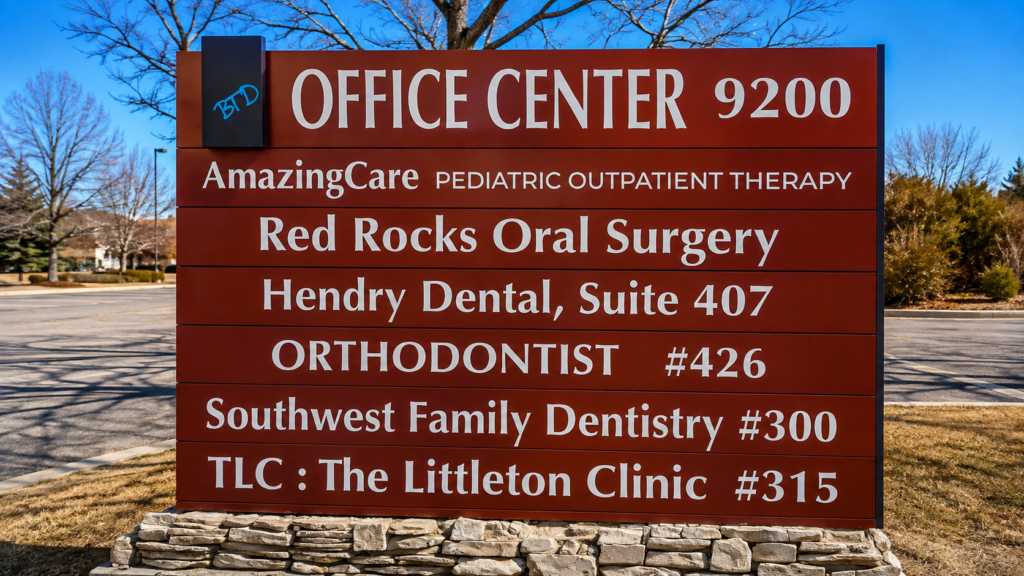
Monument sign materials should match the brand, budget, and Colorado weather
Denver’s climate is hard on exterior signage. Sun exposure, freeze-thaw cycles, hail, snow, wind, and temperature swings can all affect material choices. The right material depends on the desired look, expected lifespan, maintenance tolerance, and budget.
Common monument sign materials include:
• Aluminum cabinets: Durable, clean, and common for illuminated monument signs.
• Acrylic faces: Often used for illuminated panels or tenant names.
• Routed aluminum or composite panels: Professional, crisp, and long-lasting.
• HDU foam: Good for dimensional, carved, or textured looks without the weight of solid wood.
• Stone, brick, or masonry bases: Permanent, architectural, and ideal for property entrances.
• Wood or wood-look accents: Warm and natural, but must be specified carefully for exterior durability.
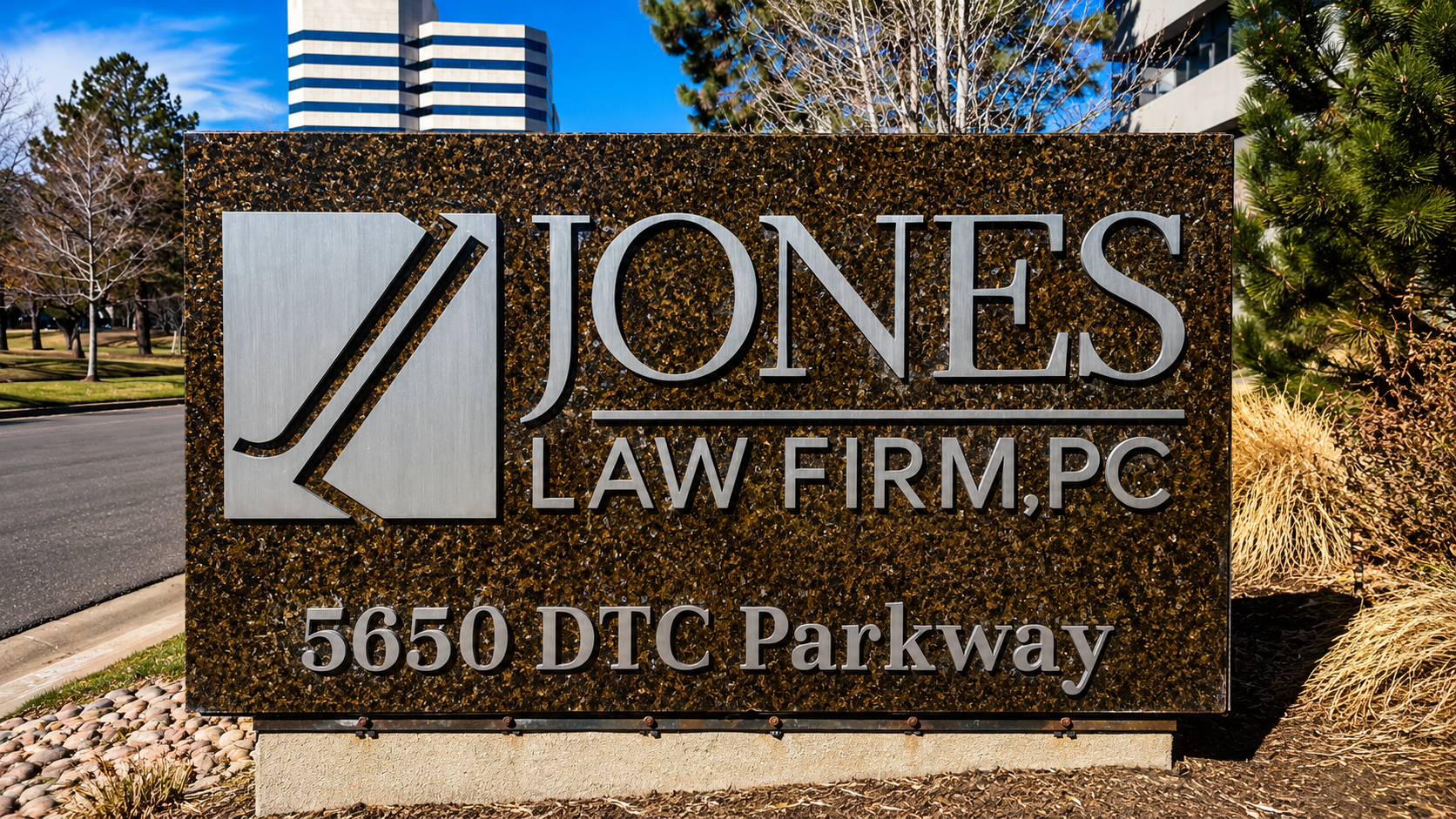
• Metal plaques and dimensional letters: Useful for upscale office, legal, medical, and community signs.
For businesses comparing custom signs for business, monument signs are usually a higher-investment option than banners, window graphics, or simple wall panels—but they also deliver stronger long-term visibility and property presence.
Lighting and power access can change the project scope
Illuminated monument signs are valuable for businesses with evening traffic, early morning operations, medical offices, restaurants, churches, multifamily communities, and properties located on busy roads. But lighting is not only a design choice. It is also an electrical and installation question.
Operator insight from the Mtn High Signs + Design team:
If you want the sign to illuminate at night, make sure you have power at the site. A nearby light pole usually will not solve it. Power often has to be trenched to the monument sign, so it is smart to consult an electrician early and understand those costs before finalizing the estimate.
This is one of the most common planning issues in monument sign projects. If electrical work is needed, it can affect cost, timeline, trenching, landscaping, and coordination with the property owner.
To speed up quoting, share as much information as possible up front:
• Number of tenants or panels
• Single-sided or double-sided layout
• Desired illumination
• Existing electrical access
• Preferred materials such as stone, wood, metal, or masonry
• Site photos and approximate sign location
• Landlord, HOA, or business park requirements
Ready to price a project correctly from the start? Review Mtn High’s monument signs service page and contact the team with site photos, tenant count, and lighting requirements so the estimate can reflect the actual conditions.
Costs, timelines, and permits vary by sign type
Monument sign pricing depends heavily on size, materials, engineering, illumination, excavation, masonry, electrical work, tenant panels, and permit requirements. The ranges below are realistic planning ranges, not fixed quotes.
| Sign Type | Typical Cost Range | Typical Timeline | Permit Requirements |
| Basic non-illuminated monument panel | $3,500–$8,000 | 3–6 weeks | Often required, depending on municipality and placement |
| Aluminum cabinet monument sign | $6,000–$15,000 | 4–8 weeks | Commonly required; may need site plan and sign details |
| Illuminated monument sign | $9,000–$25,000+ | 6–10+ weeks | Usually required; electrical coordination may be needed |
| Masonry, stone, or architectural monument | $15,000–$40,000+ | 8–14+ weeks | Usually required; may involve engineering, masonry, and site work |
| Multi-tenant monument sign | $10,000–$35,000+ | 6–12+ weeks | Usually required; tenant layout and changeable panels may be reviewed |
Permit expectations vary across Denver, Littleton, Lakewood, Aurora, Englewood, and other Front Range communities. A sign that works for one property may not be allowed at another due to zoning, setbacks, square footage limits, height restrictions, right-of-way rules, or landlord standards.
A local sign shop can help identify what information is needed before fabrication begins, reducing the risk of redesigns or installation delays.
Monument signs work best as part of a complete signage system
A monument sign often handles the first job: helping people find the property. But it should connect visually with the rest of the signage system.
For example, a medical office may need a monument sign at the street, lobby signs for business inside the entrance, ADA signage for compliance, directional signs for patient flow, and door signs for suites or departments. A multifamily property may need a monument sign at the entrance, building identification, parking signs, amenity signs, and wayfinding.
This is where a full-service Denver-area sign company has an advantage over an online-only sign provider. Mtn High Signs + Design can support design, permitting, fabrication, installation, maintenance, illuminated signs, vehicle graphics, wayfinding, ADA signage, and industry-specific signage so the property feels consistent from street to interior.
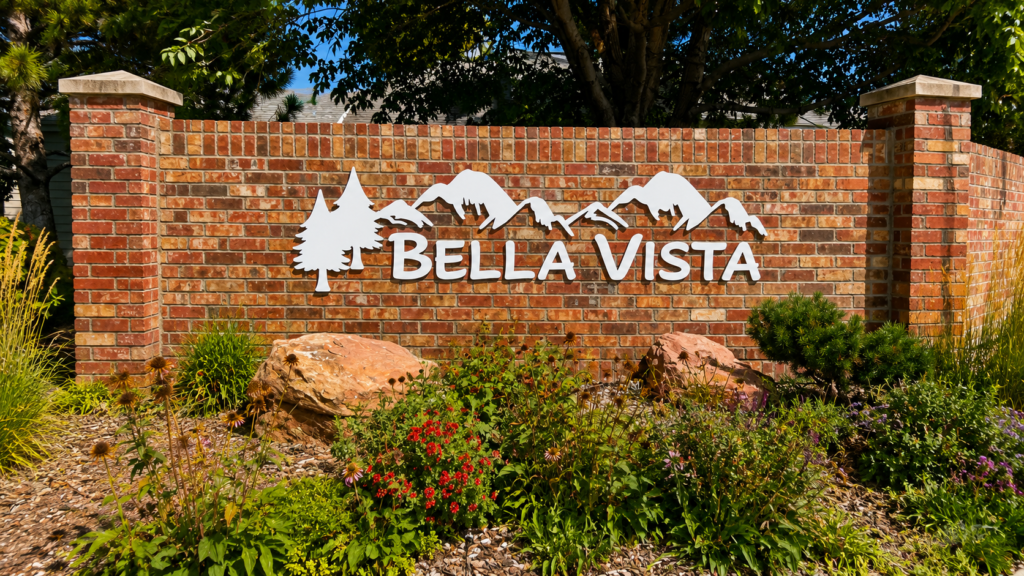
A better monument sign estimate starts with better project information
The fastest path to an accurate monument sign estimate is not simply asking, “How much does a monument sign cost?” The better question is, “What does this property need the sign to do?”
Before requesting a quote, gather:
1. Property address
2. Photos of the proposed sign location
3. Approximate desired size
4. Brand files or logo artwork
5. Tenant names, if applicable
6. Single-sided or double-sided preference
7. Lighting preference
8. Any landlord, HOA, or municipal sign criteria
9. Notes about landscaping, utilities, slopes, sidewalks, or existing bases
10. Desired materials, such as stone, metal, wood, acrylic, or masonry
The more complete the starting information, the easier it is to provide a practical recommendation instead of a rough guess.
Frequently Asked Questions
Do monument signs in Denver require a permit?
Many monument signs in Denver and surrounding cities require permits, especially if they are freestanding, illuminated, structural, or located near roads, sidewalks, or property setbacks. Requirements vary by municipality, zoning district, sign size, and placement. A local sign company can help determine what documentation is needed before production.
How much does a monument sign cost in Denver?
A simple non-illuminated monument sign may start around $3,500–$8,000, while illuminated, masonry, architectural, or multi-tenant monument signs often range from $10,000 to $40,000 or more. Electrical trenching, engineering, masonry, tenant panels, and permit requirements can significantly affect the final cost.
How long does it take to design and install a monument sign?
Most monument sign projects take 4–12 weeks depending on design approval, permitting, fabrication, materials, electrical work, site conditions, and installation scheduling. More complex signs with masonry bases, illumination, or multi-tenant layouts can take longer.
Can an existing monument sign be refaced instead of replaced?
Often, yes. If the existing structure is in good condition and meets current needs, refacing may be more cost-effective than full replacement. However, the cabinet, base, electrical components, size, and code compliance should be reviewed before assuming the existing monument can be reused.
What makes a monument sign effective for a multi-tenant property?
A strong multi-tenant monument sign uses clear hierarchy, readable tenant panels, durable materials, and placement that works for both directions of traffic. It should also allow for future tenant changes without requiring a full rebuild. For apartment communities, retail centers, and office parks, the sign should support both branding and navigation.