
Navigating a large commercial property should be an intuitive, stress-free experience. However, without a strategic approach to wayfinding signs in Denver, visitors, tenants, and employees can quickly become disoriented. A well-designed wayfinding system is more than just a collection of directional arrows; it is a comprehensive communication tool that enhances user experience, improves traffic flow, and reinforces your brand’s professionalism. For property managers and developers overseeing multifamily complexes, healthcare facilities, or corporate campuses in the Denver metro area, investing in high-quality wayfinding signage is a critical step toward maximizing property value and operational efficiency.
The Core Components of an Effective Wayfinding System
An effective wayfinding system relies on four distinct types of signage working together to guide individuals seamlessly from their arrival point to their final destination. Understanding these components is essential for creating a cohesive navigation strategy.
Identification Signage Confirms Destinations
Identification signage tells people they have arrived at the correct location. These signs serve as vital landmarks throughout your facility, helping visitors orient themselves within the built environment. Common examples include room nameplates, department markers, restroom signs, and suite numbers. In a bustling Denver corporate office or a sprawling multifamily complex, clear and consistent identification signs eliminate the frustration of wandering hallways searching for the right door.
Directional Signage Guides Movement
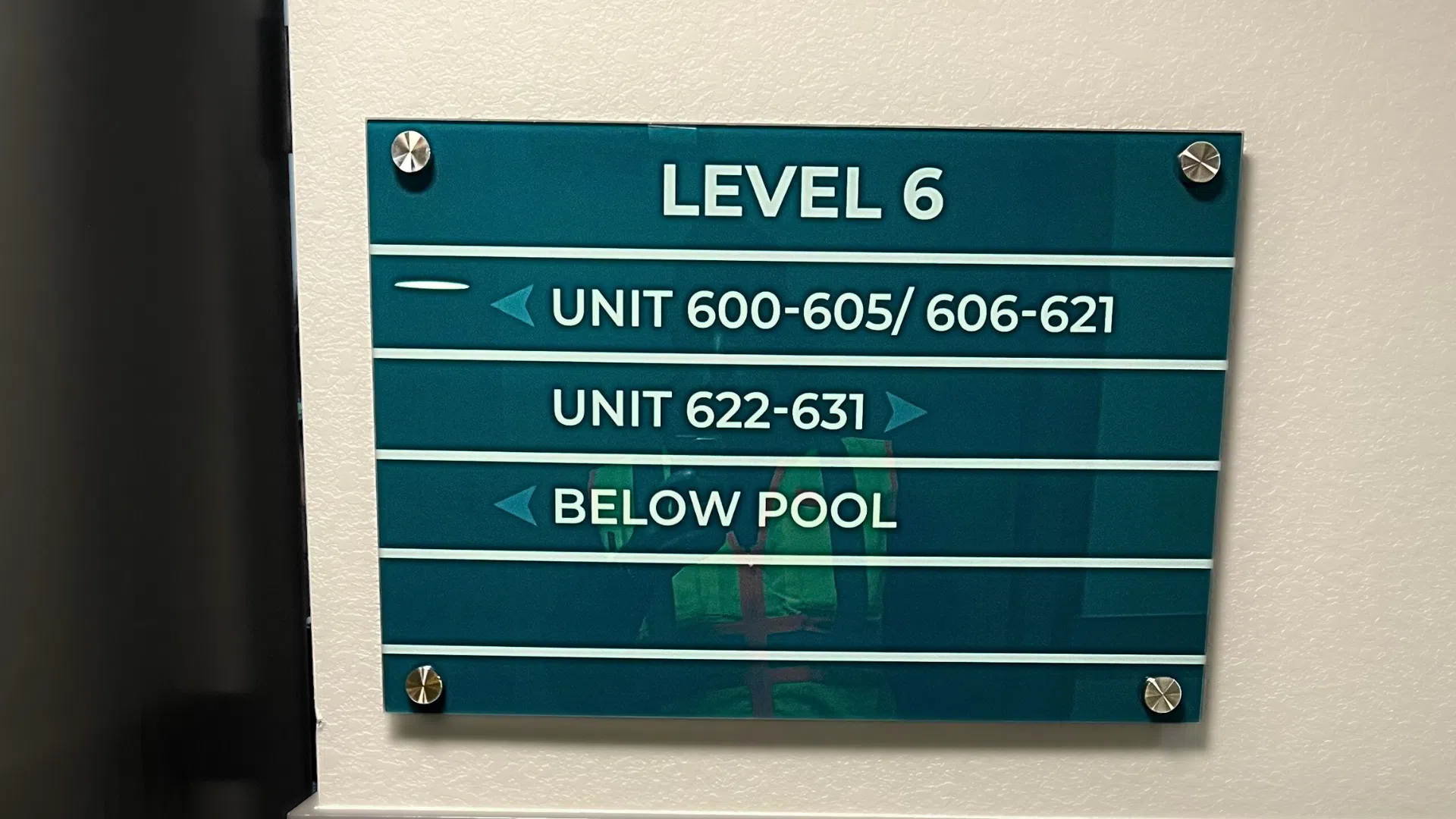
Directional signage helps people navigate from their current location to their desired destination. These signs utilize arrows, universally understood symbols, and clear terminology to indicate the correct path at key decision points, such as hallway intersections or elevator banks. To be effective, directional signs must appear consistently and frequently, ensuring visitors can move confidently without getting lost. Implementing a color-coded system can further enhance directional signage, making navigation even more intuitive.
Informational Signage Provides Context
Informational signage offers broader context about the facility, its services, and its layout. Placed in high-visibility areas like lobbies and main corridors, these signs answer common questions and help users understand the overall environment. Building directories, interactive floor plans, and amenity information fall into this category. For large Denver properties, informational signs are crucial for giving visitors a “big picture” understanding of the space before they begin navigating.
Regulatory Signage Ensures Safety and Compliance
Regulatory signage establishes rules, safety requirements, and access restrictions. These signs focus on compliance and liability, protecting both people and property. Regulatory signs include legally mandated markers, such as fire exits and ADA-compliant signage, as well as internal policy communications like restricted access warnings. In Denver, ensuring that all regulatory signage meets local building codes and federal accessibility standards is non-negotiable for property owners.
The ROI of Strategic Wayfinding for Denver Properties
Investing in a comprehensive wayfinding system delivers measurable returns across various types of commercial properties. From improving tenant retention to reducing operational disruptions, the benefits extend far beyond simple navigation.
Enhancing the Visitor and Tenant Experience
A confusing environment creates immediate frustration, negatively impacting a visitor’s perception of your property or business. Research indicates that poor navigation can significantly detract from the user experience, leading to lost productivity and diminished brand loyalty. By implementing clear wayfinding signs in Denver, you create a welcoming, professional atmosphere that puts visitors at ease. For multifamily properties, this translates to happier residents and a more attractive environment for prospective tenants.
Reducing Interruptions and Operational Costs
When visitors cannot find their way, they inevitably interrupt staff for directions. In a busy healthcare facility or corporate campus, these constant interruptions disrupt workflows and decrease overall productivity. A well-designed wayfinding system empowers visitors to navigate independently, freeing up your staff to focus on their primary responsibilities. This reduction in friction not only improves efficiency but also lowers hidden operational costs associated with poor navigation.
Strengthening Brand Identity and Property Value
Wayfinding signage is an extension of your brand’s physical presence. High-quality materials, consistent design elements, and professional installation signal to visitors that your property is well-managed and detail-oriented. Whether you choose sleek acrylic signs for a modern LoDo tech office or elegant metal fixtures for a Cherry Creek corporate headquarters, premium wayfinding systems elevate the perceived value of your property, making it more competitive in the Denver real estate market.
Navigating Denver-Specific Wayfinding Challenges
Denver’s diverse architectural landscape presents unique challenges and opportunities for wayfinding design. A one-size-fits-all approach rarely succeeds in a city characterized by both historic renovations and cutting-edge new developments.
When designing wayfinding systems for Denver properties, it is crucial to consider the specific context of the neighborhood and the building’s architecture. For instance, integrating modern digital wayfinding displays into a historic building in Capitol Hill requires careful planning to balance technological convenience with aesthetic preservation. Conversely, a sprawling corporate campus in the Denver Tech Center (DTC) may require a robust exterior-to-interior wayfinding strategy that guides visitors from parking structures through complex, multi-building environments. Partnering with a local sign company ensures that your wayfinding strategy accounts for these regional nuances and complies with all local Denver building codes.
Frequently Asked Questions About Wayfinding Signage
What makes a wayfinding system successful?
A successful wayfinding system is intuitive, consistent, and strategically placed at key decision points, utilizing clear terminology and high-contrast design to guide users effortlessly.
Do wayfinding signs need to be ADA compliant?
Yes, specific elements of a wayfinding system, particularly permanent room identification and directional signs that provide accessibility information, must adhere to ADA standards for tactile characters, braille, and mounting height.
How often should a property update its wayfinding signage?
Wayfinding systems should be reviewed whenever there are significant changes to the building layout, tenant roster, or branding, or if the signs begin to show visible signs of wear and tear.
Can digital displays be integrated into wayfinding?
Absolutely. Digital directories and interactive maps are excellent additions to modern wayfinding systems, offering real-time updates and dynamic navigation assistance for large properties.
Partner with Denver’s Wayfinding Experts
Transforming a complex property into an easily navigable space requires expertise, strategic planning, and flawless execution. At Mtn High Sign + Design, we specialize in creating custom wayfinding solutions that enhance user experience and elevate your property’s value. Our comprehensive Design, Build, and Install process ensures that every sign is perfectly tailored to your space and brand.
Stop letting poor navigation frustrate your visitors and tenants.
Contact Mtn High Sign + Design today to schedule a consultation and discover how strategic wayfinding signs in Denver can transform your commercial property.