
In a bustling and growing city like Denver, navigating large, complex properties can be a significant source of frustration for visitors, tenants, and patients. Whether it’s a first-time visitor trying to find the right office in a downtown skyscraper, a new resident locating the fitness center in a sprawling Aurora apartment complex, or a patient navigating a large medical campus in Englewood, clear and effective wayfinding signage is the key to a seamless and positive experience. For property managers, building owners, and business operators in Denver, investing in a professional wayfinding system is not just a courtesy—it’s a critical component of operational efficiency, safety, and brand perception.
What is Wayfinding Signage and Why is it Essential for Denver Properties?
Wayfinding signage is a comprehensive system of signs and visual cues that guide people through a physical environment. It’s more than just a few arrows pointing down a hallway. A well-designed wayfinding system is a cohesive and intuitive language that communicates directions, identifies locations, and provides critical information at key decision points. In a city like Denver, with its mix of historic buildings and modern developments, a thoughtful wayfinding strategy is essential for creating accessible and user-friendly spaces.
The primary goal of wayfinding is to reduce confusion and anxiety. When visitors can navigate your property with ease, they feel more confident, secure, and positive about their experience. This has a direct impact on your business, whether you’re trying to attract and retain tenants, improve patient satisfaction scores, or increase sales in a retail environment. A lack of effective wayfinding, on the other hand, can lead to missed appointments, frustrated customers, and a perception that your business is disorganized and unprofessional.
The Four Types of Wayfinding Signs Every Denver Property Needs
A comprehensive wayfinding system is composed of four distinct types of signs, each serving a specific purpose. A successful strategy integrates all four types to create a seamless navigational experience.
- Identification Signs: These are the most basic type of wayfinding sign. They confirm that a person has arrived at their destination. Examples include lobby signs with the company name, room numbers, and signs identifying specific departments or amenities (e.g., “Restroom,” “Fitness Center,” “Conference Room A”).
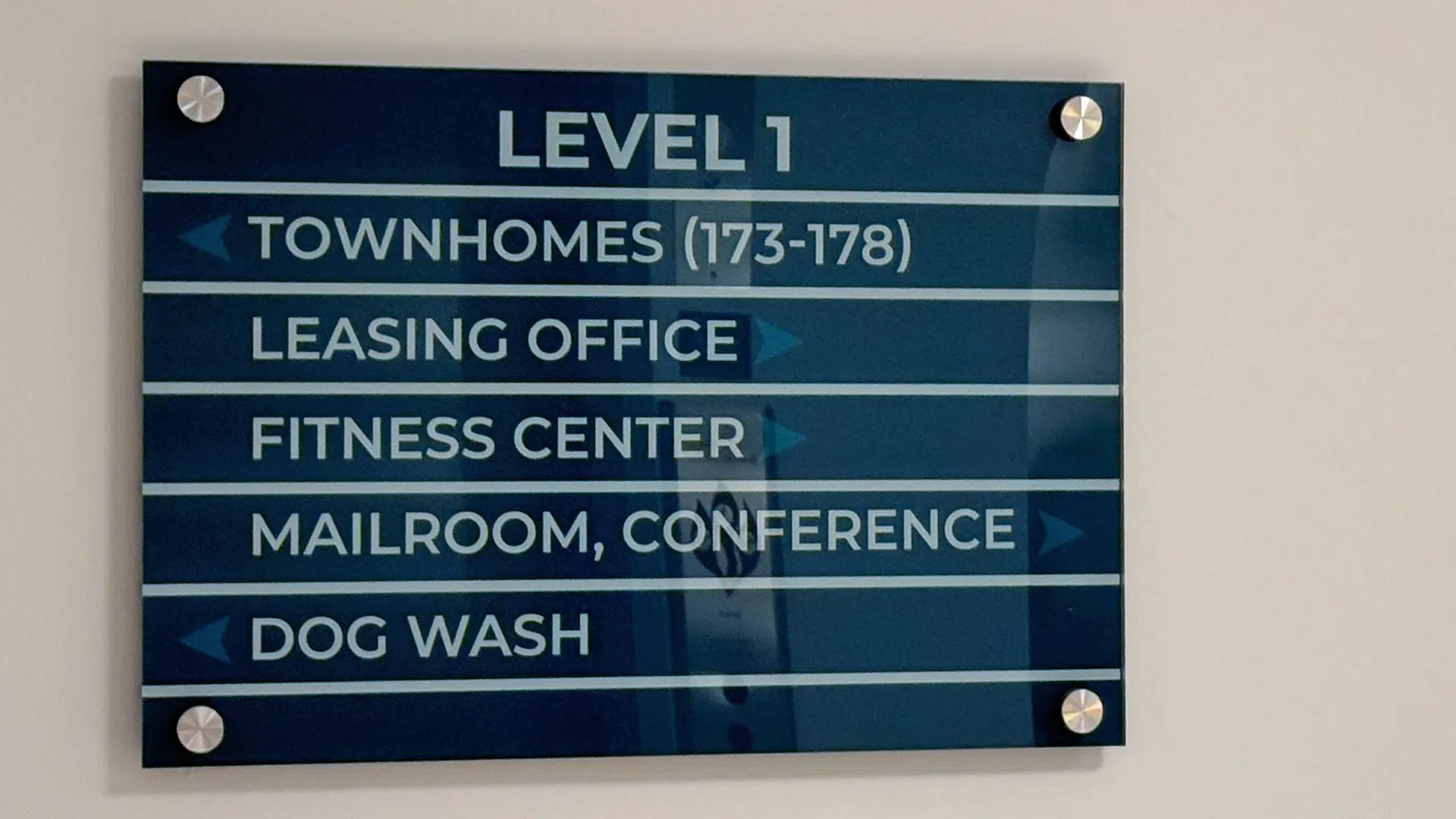
- Directional Signs: These are the workhorses of any wayfinding system. They are placed at key decision points, such as hallway intersections, elevator lobbies, and building entrances, to guide people along the correct path. Directional signs often use arrows and list multiple destinations to provide clear, concise instructions.
- Informational Signs: These signs provide supplemental information that helps people understand the environment. Examples include maps, directories, and signs that communicate rules or hours of operation. A well-placed building directory in the lobby of a downtown Denver office building is a perfect example of an informational sign.
- Regulatory Signs: These signs communicate rules and safety information. They are often required by law and include things like ADA-compliant signs, fire exit signs, and no-smoking signs. Regulatory signs are critical for ensuring the safety and accessibility of your property.
Designing an Effective Wayfinding System for the Denver Market
Creating a wayfinding system that works requires a deep understanding of design principles, user psychology, and the unique characteristics of your property. Here are some key considerations for designing an effective wayfinding system in Denver:
- Consistency is Key: Your wayfinding signs should have a consistent look and feel, using the same fonts, colors, and icons throughout the property. This creates a cohesive visual language that is easy for visitors to learn and follow.
- Clarity and Legibility: The information on your signs must be easy to read and understand at a glance. This means using clear, sans-serif fonts, high-contrast colors, and simple, universally recognized icons.
- Strategic Placement: Signs should be placed at every key decision point where a person might be unsure of which way to go. This includes building entrances, elevator lobbies, hallway intersections, and any area with a change in direction.
- Consider the Denver Audience: In a diverse city like Denver, it’s important to consider using bilingual signage or universal symbols to ensure your wayfinding is accessible to everyone, regardless of the language they speak.
- Durability for the Colorado Climate: For exterior wayfinding signs, it’s crucial to choose materials that can withstand Denver’s unique climate, from intense sun and high altitude to snow and freezing temperatures. Durable materials like aluminum and weather-resistant finishes are essential.
The Rise of Digital Wayfinding in Denver
While traditional static signs are the foundation of any wayfinding system, digital wayfinding is becoming increasingly popular in Denver’s modern office buildings, hospitals, and retail centers. Digital wayfinding uses interactive touchscreens, digital directories, and mobile apps to provide dynamic, real-time directions.
Digital wayfinding offers several advantages:
- Flexibility: You can update maps and directories instantly to reflect changes in tenants or room locations.
- Interactivity: Visitors can search for specific destinations and receive turn-by-turn directions.
- Enhanced Experience: Digital displays can also be used to share promotional messages, event information, and other engaging content.
How Mtn High Sign + Design Creates Wayfinding Systems That Work
At Mtn High Sign + Design, we specialize in creating custom wayfinding systems that are both beautiful and functional. Our expert team will work with you to develop a comprehensive strategy tailored to the unique needs of your Denver property.
Our process begins with a thorough on-site analysis and consultation. We walk your property, identify key decision points, and develop a strategic plan that maps out the location and type of every sign you’ll need. We then design a cohesive and branded sign package that aligns with your property’s aesthetic and budget. Finally, our professional installation team ensures that every sign is mounted correctly and in compliance with all ADA and local building codes.
Wayfinding Signs Denver FAQs
What types of properties need wayfinding signage?
Any large or complex property can benefit from a wayfinding system, including hospitals and medical campuses, corporate offices, multifamily housing communities, shopping centers, universities, and government buildings.
How do you ensure wayfinding signs are ADA compliant?
We ensure compliance by following all ADA guidelines for sign placement, height, color contrast, non-glare finishes, and the use of tactile characters and Braille on identification and regulatory signs.
Can you integrate our brand into the wayfinding design?
Absolutely. Our design team will create a custom wayfinding system that incorporates your brand’s logo, colors, and fonts to create a cohesive and professional look throughout your property.
Let’s Create a Clear Path for Your Visitors
A well-designed wayfinding system is an investment in your property’s functionality, safety, and user experience. It reduces frustration, enhances brand perception, and creates a welcoming environment for everyone. If you’re ready to improve navigation and elevate the experience at your Denver property, Mtn High Sign + Design is here to help.
Contact us today to schedule a free consultation and let our wayfinding experts design a custom solution that guides your visitors in the right direction, every time.