

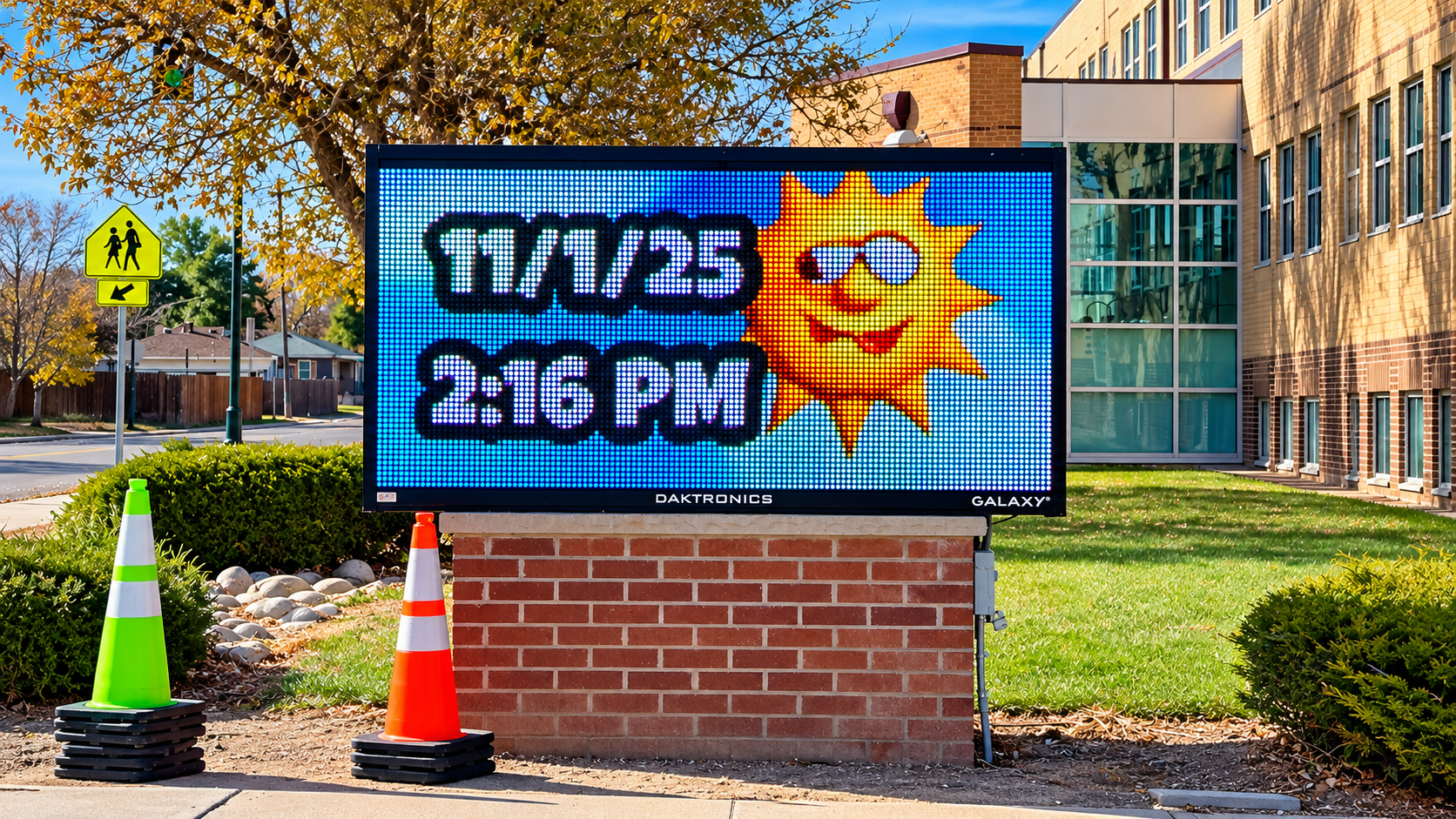
Which type of digital signage is best for a Denver business?
Indoor screens work well for flexible promotions and visitor communication, digital menu boards simplify frequent product updates, and outdoor LED signs deliver high roadside visibility. The right choice depends on viewing distance, content frequency, location, electrical access, connectivity and local sign requirements.
Digital signage can help a business communicate faster, but the display itself is only one part of the system. A successful installation also requires suitable placement, readable content, reliable power, network access and a plan for managing updates.
Indoor Screens, Menu Boards and Outdoor LED Signs Serve Different Purposes
“Digital signage” describes electronic displays that present changeable text, images, video or alerts. It can include a single reception-area screen, a coordinated restaurant menu system or an outdoor electronic message center.
The best format depends on where customers will see the message and what action the business wants them to take.
| Digital signage type | Best applications | Typical viewing conditions | Primary advantage | Key planning issue |
| Indoor screen | Lobbies, offices, retail stores, healthcare facilities and multifamily properties | Close range with controlled lighting | Flexible branded communication | Screen placement and content management |
| Digital menu board | Restaurants, cafés, breweries and service counters | Close to medium range | Fast updates across products, prices and promotions | Menu readability and coordinated screen layouts |
| Outdoor LED sign | Roadside businesses, shopping centers, schools, churches and high-traffic properties | Long range in changing daylight and weather | Strong visibility and timely messaging | Permits, brightness, power and connectivity |
Businesses should not select a screen based only on size or price. A display that performs well inside a lobby may be unreadable in direct sunlight, while an outdoor LED cabinet may be unnecessary for customers standing only a few feet away.
Indoor Digital Signage Makes Customer Communication Easier to Update
Indoor digital signage is a practical choice when a business needs to change messages without repeatedly printing new materials. It can display:
• Welcome messages and directories
• Product promotions
• Service explanations
• Event announcements
• Safety notices
• Employee communications
• Waiting-room information
• Branded videos and customer education
Placement determines effectiveness. A reception screen should be visible from the natural waiting position without forcing visitors to turn around. Retail content should appear near the product, decision point or checkout area it supports.
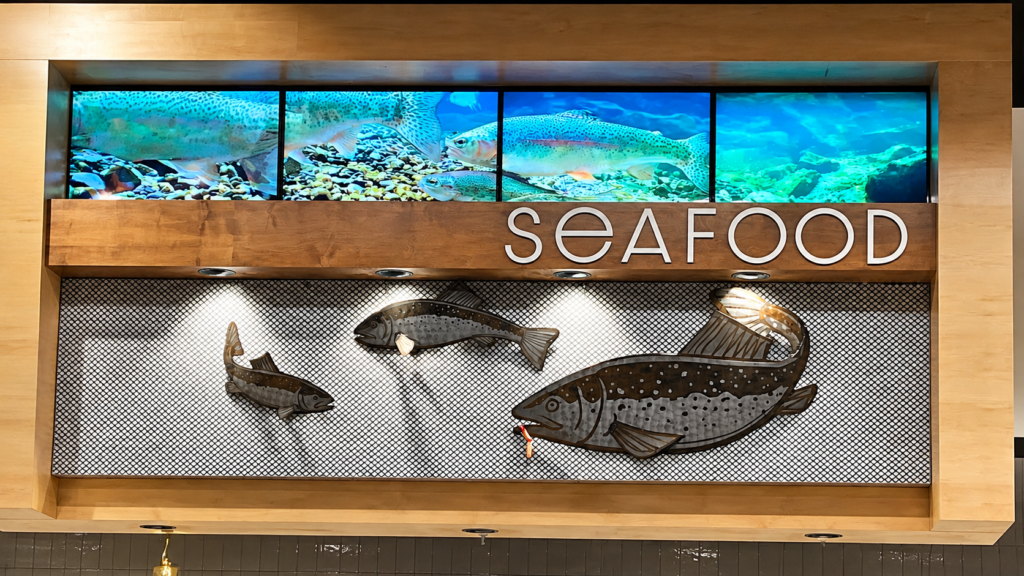
Digital displays can complement permanent ADA signage, room identification and wayfinding, but they do not automatically replace required accessibility signs. Permanent regulatory information may still need compliant tactile characters, Braille, mounting positions and visual contrast.
Digital Menu Boards Improve Clarity When Offers Change Frequently
Digital menu boards are designed for businesses that regularly update products, availability, pricing or featured offers. Restaurants and cafés can highlight seasonal items, while breweries can update tap selections and food specials without replacing printed panels.
Effective menu boards prioritize legibility over animation. Customers should be able to identify categories, compare options and make a decision quickly. That requires:
1. Clear category headings
2. Consistent pricing placement
3. High contrast between text and background
4. Limited motion near essential information
5. Type sized for the actual ordering distance
6. A content template that staff can update reliably
A multi-screen menu also needs a coordinated mounting plan. Screen edges, sightlines, ventilation, electrical outlets and media-player access should be resolved before installation—not improvised after the displays arrive.
Planning digital signage for a Denver-area location? Work with Mtn High Signs + Design to develop coordinated custom signs for business, including digital displays, permanent identification and supporting wayfinding. Request a site review before ordering equipment so placement, power, connectivity and installation can be evaluated together.
Outdoor LED Signage Delivers Visibility but Requires More Site Planning
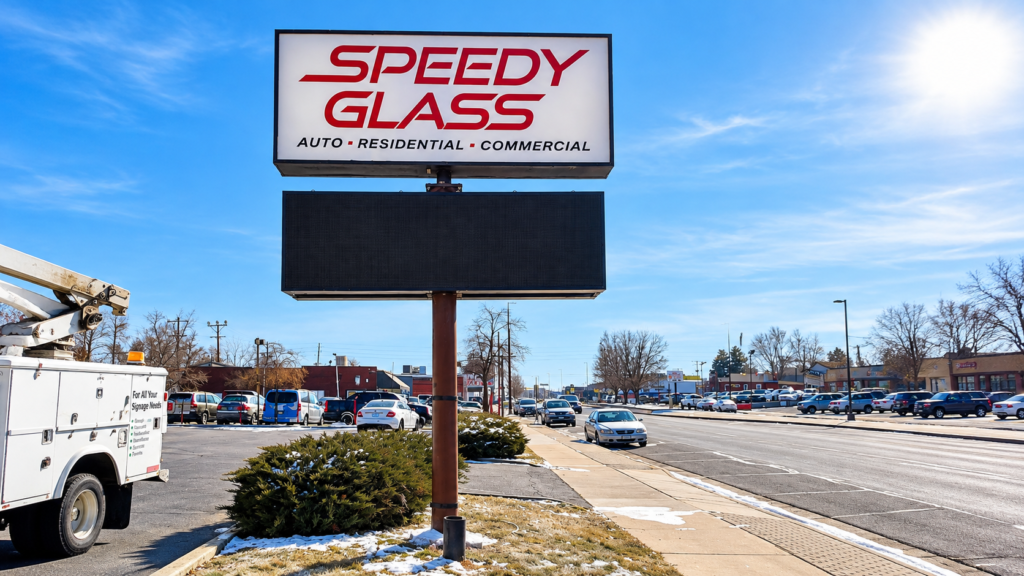
Outdoor LED signs—often called electronic message centers or EMCs—are built for long-distance viewing and changing exterior conditions. They are commonly incorporated into freestanding signs, roadside displays and monument signs
Unlike an indoor television, an outdoor display must be selected and configured around:
• Viewing distance and traffic speed
• Daytime and nighttime brightness
• Weather exposure
• Cabinet construction
• Message size and dwell time
• Property setbacks and sightlines
• Local sign-code restrictions
• Electrical and data connections
• Future maintenance access
Resolution should match the intended viewing distance. A display viewed from a nearby sidewalk needs a different pixel pitch than a roadside sign read by drivers. More resolution is not automatically better if the audience is far away and the content consists of short, bold messages.
Outdoor digital content should also remain simple. A business name, short offer and direct call to action will usually communicate more effectively than a crowded layout copied from a social media graphic.
“Before choosing an electronic message center, make sure the site is ready: plan a junction box within five feet of the sign, decide between Ethernet and cellular connectivity, and have an electrician review the project early. That preparation helps control cost and keep installation on schedule.” — Mtn High Signs + Design
Ethernet can provide a stable connection when network access is planned before installation. Cellular service may be appropriate where a wired connection is impractical, but it generally adds ongoing expense. Resolving that decision early allows the installation team to connect and commission the sign efficiently.
A Site-First Process Prevents Expensive Digital Signage Mistakes
A Denver business can narrow its options with a straightforward planning sequence:
1. Define the audience. Identify who will see the display, from where and for how long.
2. Define the content. List what must change, who will update it and how often.
3. Evaluate the location. Check visibility, glare, structural conditions and mounting surfaces.
4. Confirm electrical capacity. Have an electrician review the proposed installation and required service.
5. Choose connectivity. Decide whether the content system will use Ethernet, Wi-Fi or cellular service.
6. Review local requirements. Exterior electronic signs may require permits and must comply with the code governing the property.
7. Coordinate the full sign system. Match digital displays with building identification, directional signs and other permanent sign designs.
8. Plan maintenance access. Ensure screens, cabinets, controllers and electrical components can be serviced safely.
Working with a Denver-area full-service sign shop helps keep design, permitting, fabrication, installation and maintenance aligned. It also prevents the digital component from looking disconnected from vehicle graphics, illuminated signs, wayfinding and other branded elements.
The Best Digital Signage System Starts with the Message
Indoor screens are usually the strongest fit for close-range communication. Digital menu boards are purpose-built for organized, frequent product updates. Outdoor LED signs are best when visibility from roads, parking areas or large properties is the priority.
The right investment is not necessarily the largest or brightest display. It is the system that delivers a readable message in the actual environment, can be updated consistently and has the infrastructure to operate reliably.
Frequently Asked Questions About Digital Signage
Does outdoor digital signage require a permit in Denver?
Outdoor digital signage may require approval based on the property, zoning district, sign type, dimensions, placement and illumination. Electronic message centers can also be subject to rules governing brightness and message changes. Requirements should be confirmed for the specific address before fabrication or installation begins.
Can digital signage work without an internet connection?
A display can sometimes play locally stored content without continuous internet access, but remote updates generally require a network connection. Ethernet, Wi-Fi and cellular service are common options. The best choice depends on site infrastructure, reliability needs and ongoing operating costs.
How far should a junction box be from an outdoor LED sign?
Mtn High Signs + Design recommends planning a junction box within five feet of the electronic message center. An electrician should review the site and electrical requirements early so the final configuration complies with applicable codes and supports an efficient installation.
Can a digital screen replace permanent business or ADA signage?
Not in every application. Digital screens are useful for changing information, but permanent identification, egress, room and accessibility signs may still be required. A coordinated signage plan should separate changeable digital content from information that must remain continuously visible and code compliant.