
What should a Denver business consider before ordering a blade sign?
A successful blade sign must be visible to pedestrians, proportionate to the storefront, consistent with the brand and approved for its location. Businesses should confirm property restrictions and municipal requirements before fabrication, then choose materials, lighting and mounting hardware engineered for Colorado weather and the building’s conditions.
Blade signs make storefronts easier to find from the sidewalk
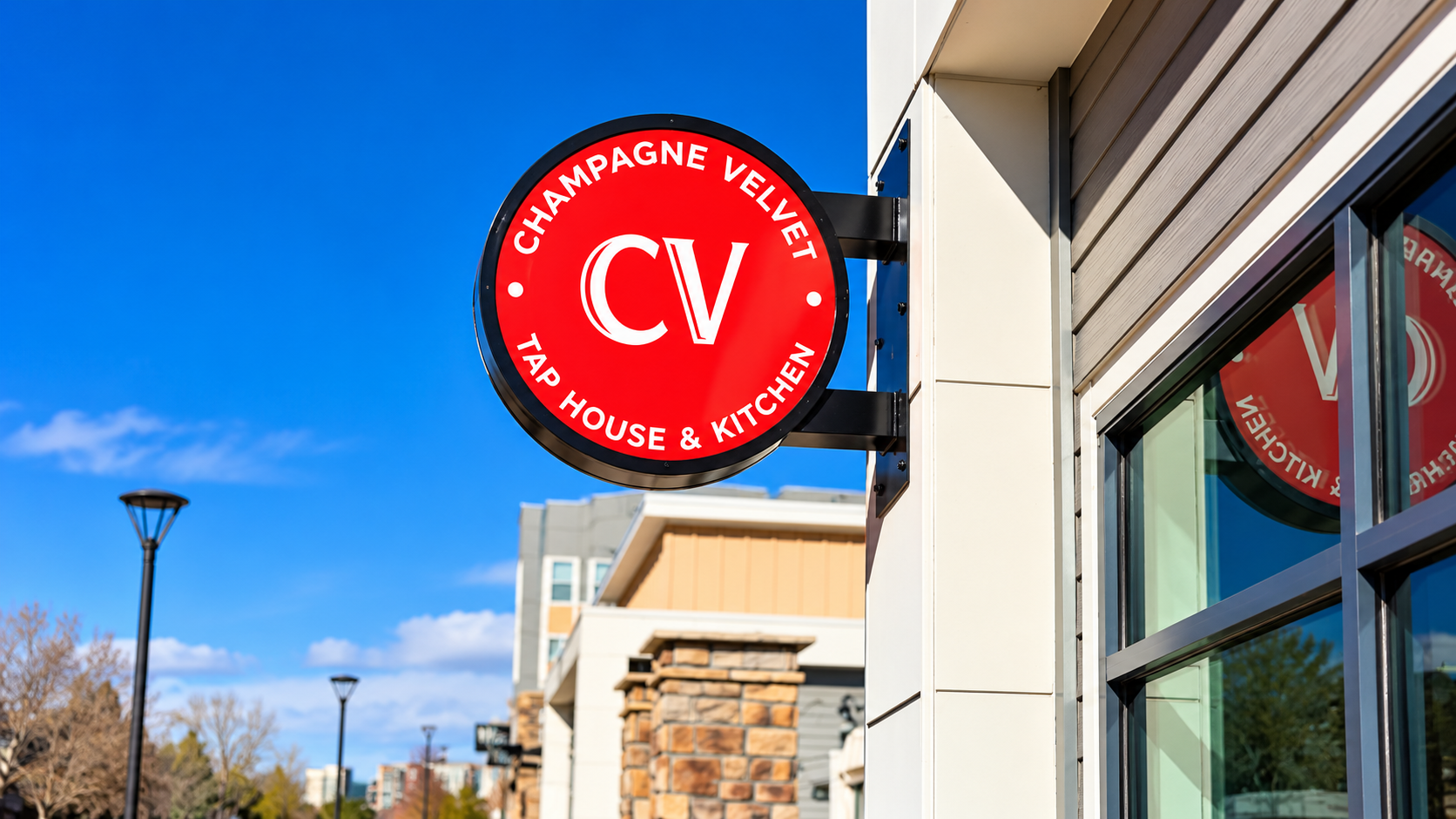
A blade sign is mounted perpendicular to a building façade, placing the sign face in the natural sightline of people walking parallel to the storefront. It may also be called a projecting sign.
Traditional wall signs work well when viewed from across a street or parking lot. They can become difficult to see when pedestrians are already on the same side of the block. A blade sign solves that visibility problem by presenting the business name or symbol toward approaching foot traffic.
This makes blade signs particularly useful for:
• Retail stores in continuous rows of storefronts
• Restaurants, cafés and breweries
• Salons, studios and professional offices
• Businesses beneath awnings or inside mixed-use developments
• Entrances that are recessed or visually obscured
• Pedestrian-oriented commercial districts
A blade sign can complement—not necessarily replace—other custom signs for business. The strongest storefront systems often use a wall sign for broader identification and a projecting sign for close-range pedestrian navigation.
Effective sizing begins with the viewing conditions
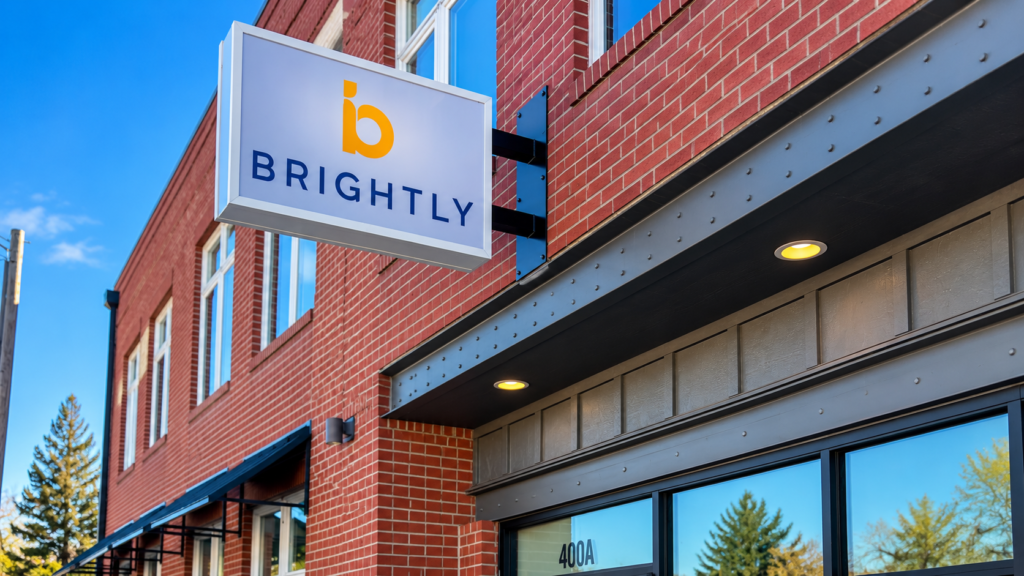
There is no single ideal blade sign size for every Denver storefront. The correct dimensions depend on where the sign will be installed and how customers approach the entrance.
Evaluate these five conditions before approving a design:
1. Viewing distance: A sign intended for nearby pedestrians can use less copy than a sign expected to communicate from farther down the block.
2. Mounting height: The sign must remain visible without interfering with required pedestrian clearance or creating a hazard.
3. Projection from the building: Greater projection can improve visibility, but allowable projection may be restricted by local code or property rules.
4. Façade scale: The sign should be noticeable without overwhelming the storefront or conflicting with nearby architectural features.
5. Message length: A compact logo, symbol or short business name is more effective than several lines of small text.
Strong sign designs prioritize immediate recognition. If someone needs to stop and study the sign to understand it, the design is carrying too much information.
“The more unique the design the more you will get noticed. The blade signs that stand out with branding, colors and design get seen. Be creative, leverage your brand and showcase it so people stop and see you!” — Mtn High Signs + Design
For example, a Denver coffee shop may gain more recognition from a distinctive cup icon, bold brand color and short name than from a rectangular panel listing coffee, pastries, breakfast and operating hours.
Planning a blade sign for a Denver-area storefront? Mtn High Signs + Design can coordinate the design, approval planning, fabrication and installation as one project. Start with a custom sign review to determine what fits the façade, brand and location before committing to production.
Lighting should match operating hours and surrounding conditions
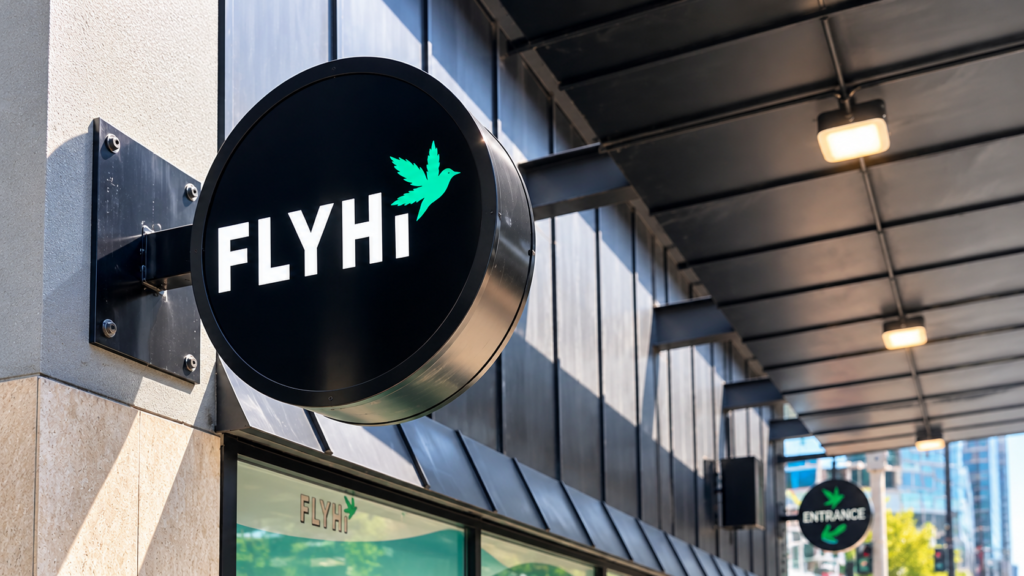
An illuminated blade sign can improve identification after dark, during winter afternoons and in visually busy commercial areas. Illumination is not automatically necessary, however. The decision should reflect operating hours, ambient light, brand style and approval requirements.
| Blade sign option | Best suited for | Primary consideration |
| Non-illuminated panel | Daytime businesses and well-lit walkways | Depends on exterior or ambient lighting after dark |
| Internally illuminated cabinet | Businesses needing strong nighttime visibility | Requires electrical planning and sufficient cabinet depth |
| Push-through or routed face | Custom dimensional branding with controlled illumination | Fabrication details affect brightness and legibility |
| Externally illuminated sign | Architectural or traditional sign styles | Fixtures must be positioned to avoid glare and shadows |
| Halo-lit dimensional sign | Premium storefront presentation | Works best with suitable depth and wall surface |
Lighting should support legibility rather than overpower the design. Even illumination, strong contrast and restrained copy usually produce a more professional result than excessive brightness.
Electrical access also needs to be evaluated early. Concealing conduit and coordinating the sign location with the building’s electrical system are easier before fabrication than during installation.
Denver approvals should be resolved before fabrication
Blade signs may be regulated according to zoning, sign area, projection, mounting height, illumination and location within the public right-of-way. Requirements can also vary among Denver, surrounding Front Range municipalities and special districts.
A practical approval sequence is:
1. Document the proposed storefront and installation surface.
2. Review the lease, landlord criteria and shopping-center sign standards.
3. Identify the governing municipality and any special design district.
4. Prepare drawings showing dimensions, projection, mounting and illumination.
5. Submit required permit or approval materials.
6. Fabricate only after the applicable approvals are secured.
7. Schedule professional installation and any required electrical work.
Historic buildings and design-review districts may impose additional standards for materials, lighting or architectural compatibility. A landlord’s approval also does not replace municipal approval, and a city permit does not override private lease restrictions.
This is where a full-service local sign partner adds practical value. Mtn High Signs + Design can connect design decisions with permitting, fabrication, installation and future maintenance rather than treating each stage as a separate transaction.
Colorado conditions make materials and mounting critical
Denver blade signs must tolerate intense sunlight, temperature swings, snow, moisture and wind. Material selection should therefore account for both appearance and long-term exterior performance.
Common choices include:
• Aluminum panels and cabinets for corrosion resistance and manageable weight
• Routed aluminum or composite faces for custom shapes
• Acrylic or polycarbonate components for illuminated applications
• Exterior-grade paints, finishes and vinyl films selected for UV exposure
• Steel or aluminum brackets designed for the sign’s size and weight
The attachment point matters as much as the sign face. Masonry, concrete, structural framing and decorative cladding require different installation methods. Hardware should be selected for the substrate and expected loads rather than attached wherever the façade is easiest to reach.
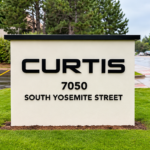
Blade signs may also work as part of a broader exterior identification system. Properties with setback entrances or parking access may pair them with monument signs, directional signs or window graphics to guide customers from the street to the correct door.
A pre-production checklist prevents expensive revisions
Before authorizing fabrication, confirm that:
• The sign can be understood from both pedestrian approach directions.
• The logo and text remain legible at the expected viewing distance.
• The shape and colors clearly reflect the business’s identity.
• Dimensions comply with property and municipal requirements.
• Required vertical clearance and projection limits have been checked.
• The mounting surface can support the proposed assembly.
• Electrical access is available if the sign will be illuminated.
• Landlord, district and municipal approvals are documented.
• Installation and future service access have been considered.
Frequently asked questions about blade signs
Do blade signs require permits in Denver?
Many exterior projecting signs require municipal review or permits, but the exact requirements depend on the property, zoning, dimensions, projection and illumination. Confirm the applicable rules before fabrication. Landlord or district approval may also be required.
What information should appear on a blade sign?
Use the shortest message that identifies the business: typically a name, logo or recognizable symbol. Phone numbers, service lists and long taglines usually reduce readability at pedestrian viewing distances.
Should a blade sign be illuminated?
Illumination is valuable when the business operates after dark or competes with surrounding visual clutter. A non-illuminated sign may be sufficient for daytime operations in a well-lit pedestrian area. The property’s electrical access and sign standards should also guide the choice.
Can a blade sign use a custom shape?
Yes. Custom shapes can make blade signs more distinctive and reinforce brand recognition. The design must still account for structural stability, readable sign area, fabrication limits and applicable approval requirements.
How long does a blade sign project take?
The schedule depends on design complexity, landlord review, municipal approval, fabrication, electrical coordination and installation conditions. Beginning with a site assessment and approval-ready design reduces preventable delays.