

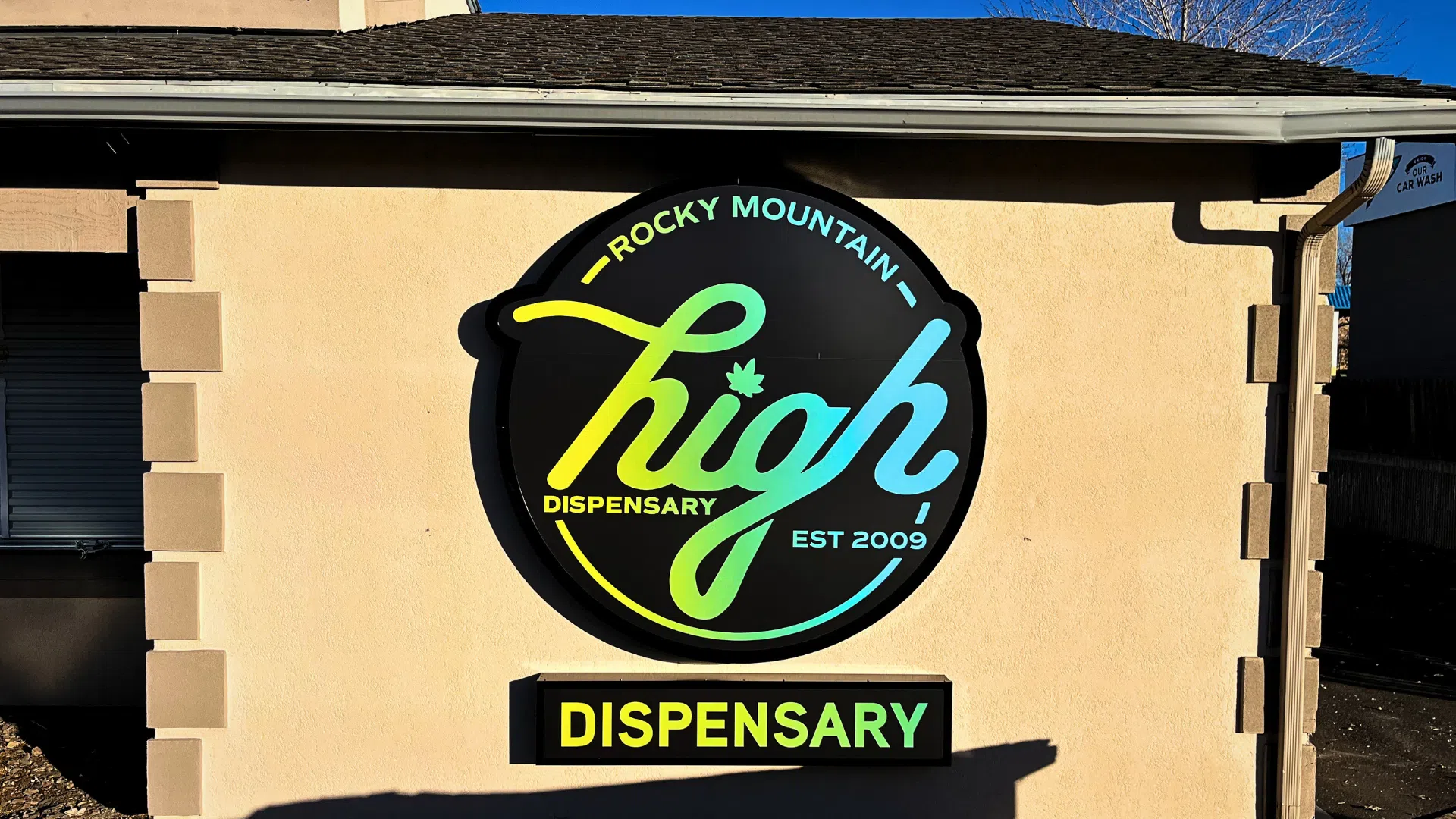
For businesses located along Denver’s major thoroughfares—such as Colorado Boulevard, Colfax Avenue, or I-25—visibility is the single most critical factor in driving customer acquisition. Pylon signs and building fascia signs are massive, high-elevation exterior signs designed specifically to capture the attention of motorists traveling at high speeds.
Here is the bottom line: if your business cannot be identified from at least a block away, you are losing revenue to competitors who are easier to find. While monument signs are excellent for low-speed, close-range neighborhood viewing, pylon and building signs are engineered for maximum distance and impact. Because these signs represent a significant capital investment and require strict adherence to local zoning codes, choosing the right design and installation partner is critical. This guide breaks down the differences between pylon and building signs, their ROI, and what Denver business owners need to know about municipal height restrictions.
The ROI of High-Elevation Visibility
A strategically placed pylon or building sign offers one of the highest returns on investment (ROI) of any local advertising medium. Unlike digital ads that disappear the moment you stop paying, a high-elevation sign provides permanent, 24/7 brand exposure to thousands of daily commuters.
What this means for your business is a dramatic reduction in your overall customer acquisition cost. Industry studies show that a highly visible pylon sign can increase a retail location’s gross sales by up to 15%. For businesses tucked away in multi-tenant shopping centers or located slightly off the main road, a pylon sign acts as a beacon, guiding customers directly to your entrance. It transforms your physical location from a hidden secret into a local landmark, capturing both planned visits and impulse stops.
Pylon Signs vs. Building Signs: What is the Difference?
While both are designed for long-distance visibility, they serve different structural purposes and are subject to different zoning regulations.
Pylon Signs (Pole Signs): A pylon sign is a freestanding structure that towers above the ground, typically supported by one or two exposed steel poles (or enclosed in an architectural cover). They are commonly seen at gas stations, hotels, and large shopping plazas. Because they are detached from the building, they can be placed directly at the edge of the property line, right next to the street, providing unobstructed visibility over trees and traffic.
Building Signs (Fascia Signs): Building signs are mounted directly to the exterior wall (fascia) of your commercial property. They can take the form of massive channel letters, illuminated sign cabinets (lightboxes), or large flat panels. Building signs utilize the existing height of your architecture to gain visibility, making them the primary choice for businesses in dense urban areas like Downtown Denver or the Tech Center, where freestanding pylons are not permitted.
Navigating Denver’s Height and Zoning Restrictions
The City and County of Denver enforces strict zoning codes regarding the height, size, and placement of exterior commercial signs to maintain the city’s aesthetic and ensure public safety.
The most critical regulation for pylon signs is the maximum height restriction. In many of Denver’s commercial zoning districts, freestanding signs are capped at a maximum height of 35 feet, though this can vary significantly depending on the specific neighborhood and proximity to residential zones. Furthermore, multi-tenant pylon signs often require a Comprehensive Sign Plan to be approved by the city before any permits are issued. Building signs are similarly regulated based on the linear footage of your storefront. Working with a local Denver sign manufacturer is essential, as they will handle the complex permitting process, engineer the sign to withstand Colorado’s high wind loads, and ensure full compliance with the municipal code.
The Power of Multi-Tenant Pylon Signs
If you manage a commercial property or lease space in a shopping center, a multi-tenant pylon sign is a critical asset for tenant retention and property valuation.
These towering structures feature multiple illuminated cabinets (or a digital LED message center) stacked vertically, allowing several businesses to share the cost and visibility of a single sign. For property managers, offering premium placement on a multi-tenant pylon is a powerful negotiating tool when signing new leases. For the tenants, it provides highway-level visibility that they could never achieve or afford on their own.
A Colorado Boulevard Retail Success Story
A sprawling auto dealership located just off busy Colorado Boulevard was struggling to capture the attention of southbound traffic due to a newly constructed overpass that partially obscured their building.
We engineered and installed a massive, 30-foot custom pylon sign positioned at the very edge of their property line. The sign featured a dual-pole design with an architectural aluminum cover painted to match the dealership’s branding. The top cabinet housed their primary logo with ultra-bright LED internal illumination, while a high-resolution digital message center was installed below to advertise current financing specials. The sign easily cleared the visual obstruction of the overpass, resulting in an immediate, measurable spike in weekend showroom traffic and cementing their presence on one of Denver’s busiest roads.
Frequently Asked Questions About High-Elevation Signs
How much does a pylon sign cost in Denver?
Due to the extensive engineering, steel fabrication, deep concrete footings, and heavy equipment required for installation, custom pylon signs represent a major investment. Prices typically start around $15,000 for a basic design and can easily exceed $50,000 to $100,000 for towering, multi-tenant structures with digital LED displays.
Do building signs require structural engineering?
Yes. Large building signs, especially those mounted high on a facade, must be engineered to withstand Denver’s severe wind loads. The mounting hardware must be securely anchored to the building’s structural steel or masonry, not just the decorative facade.
Can I upgrade my old fluorescent pylon sign to LED?
Absolutely. This is one of our most popular services. We can retrofit your existing pylon sign cabinet by removing the old, energy-draining fluorescent tubes and installing modern, ultra-bright LED modules. This drastically reduces your energy bill and eliminates the need for constant bulb replacements.
How long does it take to get a pylon sign installed?
Because of the complex city permitting process, structural engineering reviews, and custom steel fabrication, a new pylon sign project typically takes 8 to 12 weeks from the initial design consultation to final installation.
Rise Above the Competition
If your business is invisible from the street, you are leaving money on the table. Whether you need a towering pylon sign for a new shopping center or massive illuminated channel letters for your corporate headquarters, our team handles the engineering, permitting, and installation.